
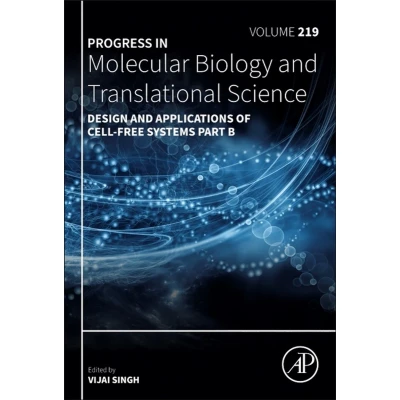
Progress in Molecular Biology and Translational ScienceVolume 219 Design Applications of Cell Free Systems Part B
Uitgelicht

|
129,32 |
Naar shop
|

|
129,32 |
Naar shop
|

|
139,00 |
Naar shop
|
| VERGELIJK ALLE AANBIEDERS (3) | ||
 Beschrijving
Bol
Design and Applications of Cell-Free Systems, Part B, Volume 219 offers the latest information on cell free systems for the expression of transmembrane proteins, enzymes, proteins, therapeutics, vaccines, and uses in the biotransformation, translational modification, self-assembly of nano-biomaterials, and in synthetic biology design, challenges, and opportunities. It will help students, researchers, scientists, clinicians, stakeholders, policymakers, and practitioners understand cell-free systems and their applications in many areas. The book represents an important component in the field of biochemistry, duly acknowledging the pioneering effort made by Nobel laureate Eduard Buchner for discovery of fermentation in yeast cell extracts (YCE). CFS requires core molecular machinery, including RNA polymerase, translational apparatus (ribosomes, tRNA synthases, and translation factors), energy-generating molecules, and their cofactors, substrates, and DNA or plasmid templates for obtaining desired products. CFS is a simple, rapid, and sensitive platform, which is devoid of membrane-bound barriers, yet contains all the mandatory substrates, biomolecules, and machineries required for the synthesis of the desired proteins.


 Beschrijving
(1)
Beschrijving
(1)
Design and Applications of Cell-Free Systems, Part B, Volume 219 offers the latest information on cell free systems for the expression of transmembrane proteins, enzymes, proteins, therapeutics, vaccines, and uses in the biotransformation, translational modification, self-assembly of nano-biomaterials, and in synthetic biology design, challenges, and opportunities. It will help students, researchers, scientists, clinicians, stakeholders, policymakers, and practitioners understand cell-free systems and their applications in many areas. The book represents an important component in the field of biochemistry, duly acknowledging the pioneering effort made by Nobel laureate Eduard Buchner for discovery of fermentation in yeast cell extracts (YCE). CFS requires core molecular machinery, including RNA polymerase, translational apparatus (ribosomes, tRNA synthases, and translation factors), energy-generating molecules, and their cofactors, substrates, and DNA or plasmid templates for obtaining desired products. CFS is a simple, rapid, and sensitive platform, which is devoid of membrane-bound barriers, yet contains all the mandatory substrates, biomolecules, and machineries required for the synthesis of the desired proteins.
 Productspecificaties
 Prijshistorie
* Prijshistorie bevat geen data van Amazon, Amazon Marketplace.
Prijzen voor het laatst bijgewerkt op:
 Gerelateerde resultaten


