
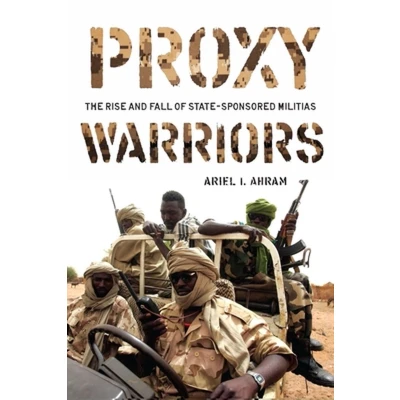
Proxy Warriors
Uitgelicht

|
29,99 |
Naar shop
|
| VERGELIJK ALLE AANBIEDERS (1) | ||
 Beschrijving
Bol
The book explains why some Third World states have centralized, conventional military forces while others rely on militias, paramilitaries, and other non-state actors using detailed case studies of Indonesia, Iraq, and Iran and offers policy recommendations for dealing with weak states based on this analysis. In this book, Ariel Ahram offers a new perspective on a growing threat to international and human security—the reliance of 'weak states' on quasi-official militias, paramilitaries, and warlords. Tracing the history of several "high profile" paramilitary organizations, including Indonesia's various militia factions, Iraq's tribal "awakening," and Iran's Revolutionary Guard and Basij corps, the book shows why and how states co-opt these groups, turning former rebels into state-sponsored militias. Building on an historical and comparative empirical approach that emphasizes decolonization, revolution, and international threat, the author offers a new set of policy prescriptions for addressing this escalating international crisis—with particular attention to strategies for mitigating the impact of this devolution of violence on the internal and international stability of states.


Vergelijk aanbieders (1)

 Beschrijving
(1)
Beschrijving
(1)
The book explains why some Third World states have centralized, conventional military forces while others rely on militias, paramilitaries, and other non-state actors using detailed case studies of Indonesia, Iraq, and Iran and offers policy recommendations for dealing with weak states based on this analysis. In this book, Ariel Ahram offers a new perspective on a growing threat to international and human security—the reliance of 'weak states' on quasi-official militias, paramilitaries, and warlords. Tracing the history of several "high profile" paramilitary organizations, including Indonesia's various militia factions, Iraq's tribal "awakening," and Iran's Revolutionary Guard and Basij corps, the book shows why and how states co-opt these groups, turning former rebels into state-sponsored militias. Building on an historical and comparative empirical approach that emphasizes decolonization, revolution, and international threat, the author offers a new set of policy prescriptions for addressing this escalating international crisis—with particular attention to strategies for mitigating the impact of this devolution of violence on the internal and international stability of states.
 Productspecificaties
| EAN |
|
|---|---|
| Maat |
|
 Prijshistorie
Prijzen voor het laatst bijgewerkt op:
 Gerelateerde resultaten


