

€ 6,44 Gratis verzending

Gesponsorde links
|
|
6,44 |
Naar shop
|

|
6,99
6,50 |
Naar shop
|
| VERGELIJK ALLE AANBIEDERS (2) | ||
 Beschrijving
Vergelijk aanbieders (2)
Gesponsorde links · Sommige shops betalen ons een vergoeding
€ 6,44 Gratis verzending
€ 6,99 € 6,50 Gratis verzending
Winkels met andere maten
Beschrijving
(1)
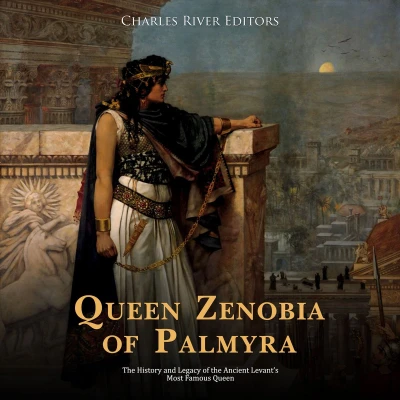
Although the ancient world was for the most part a patriarchal place, more than a few women rose to prominence and were able to exert political power. Hatshepsut (ruled 1479-1458 BCE) was ruler of Egypt’s mighty New Kingdom, and nearly 1,500 years later the more famous Cleopatra VII (reigned 51-30 BCE) was the regent of the Nile Valley. Many other women in Babylon, Assyria, Greece, and Rome played significant roles as regents for their young sons and occasionally as the true power behind the throne. Of these rulers, one of the most significant females in late antiquity was Zenobia, who for just a few short years in the late 3rd century CE ruled the wealthy merchant city of Palmyra. During her time as ruler, Zenobia extended Palmyra’s boundaries from its very circumscribed location in the Syrian desert to that of a full-fledged empire that included most of the Levant, Egypt, and part of Anatolia. Despite living in a man’s world, Zenobia was able to come to power and eventually challenge the Roman Emperor Aurelian (r. 270-275) through a combination of intelligence, guile, and some luck. Zenobia’s immediate impact was her direct challenge to the political authorities in both Rome and Persia. Before Zenobia, Palmyra had a fair degree of autonomy, but it was essentially a Roman client state. Palmyra’s stability and wealth were also dependent upon the various dynasties that ruled Persia: the Persians could attack Palmyra from the desert to the east or they could simply stop the trade routes, thereby destroying the city-state’s wealth. Zenobia sought to establish Palmyra as a power in its own right so that it would no longer be a pawn in the constant wars between Rome and Persia. In Zenobia’s eyes, Palmyra was a true equal of the Romans and Persians and should be given an equal place at the geopolitical table when it came to diplomacy and trade.
 Prijshistorie
* Prijshistorie bevat geen data van Amazon.
Prijzen voor het laatst bijgewerkt op:
 Gerelateerde resultaten
 Productspecificaties


