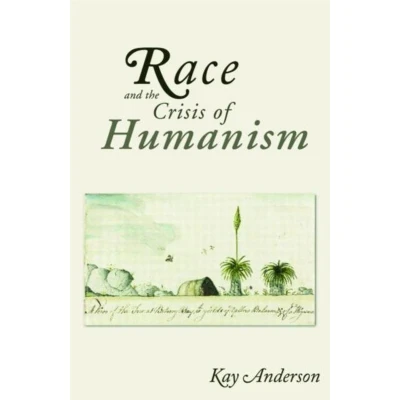

Race And the Crisis of Humanism

Prijzen vanaf
53,99

Uitgelicht

VERGELIJK ALLE AANBIEDERS (2)

Beschrijving

Bol Partner Kay Anderson's provocative account traces how the nineteenth century ideas of race arose. Including historical understandings of 'humanity'. This original contribution will be of interest to academics of diverse social and humanities backgrounds. The idea that humankind constituted a unity, albeit at different stages of 'development', was in the 19th century challenged with a new way of thinking. The 'savagery' of certain races was no longer regarded as a stage in their progress towards 'civilisation', but as their permanent state. What caused this shift? In Kay Anderson's provocative new account, she argues that British colonial encounters in Australia from the late 1700s with the apparently unimproved condition of the Australian Aborigine, viewed against an understanding of 'humanity' of the time (that is, as characterised by separation from nature), precipitated a crisis in existing ideas of what it meant to be human. This lucid, intelligent and persuasive argument will be necessary reading for all scholars and upper-level students interested in the history and theories of 'race', critical human geography, anthropology, and Australian and environmental studies.

Vergelijk aanbieders (2)

Shop
Prijs
Verzendkosten
Totale prijs
53,99
Gratis
53,99
Naar shop
Gratis Shipping Costs
115,25
gebruikt
Gratis
115,25
Naar shop
Gratis Shipping Costs
Beschrijving (2)
Bol Partner

Kay Anderson's provocative account traces how the nineteenth century ideas of race arose. Including historical understandings of 'humanity'. This original contribution will be of interest to academics of diverse social and humanities backgrounds. The idea that humankind constituted a unity, albeit at different stages of 'development', was in the 19th century challenged with a new way of thinking. The 'savagery' of certain races was no longer regarded as a stage in their progress towards 'civilisation', but as their permanent state. What caused this shift? In Kay Anderson's provocative new account, she argues that British colonial encounters in Australia from the late 1700s with the apparently unimproved condition of the Australian Aborigine, viewed against an understanding of 'humanity' of the time (that is, as characterised by separation from nature), precipitated a crisis in existing ideas of what it meant to be human. This lucid, intelligent and persuasive argument will be necessary reading for all scholars and upper-level students interested in the history and theories of 'race', critical human geography, anthropology, and Australian and environmental studies.

Bol

The idea that humankind constituted a unity, albeit at different stages of 'development', was in the 19th century challenged with a new way of thinking. The 'savagery' of certain races was no longer regarded as a stage in their progress towards 'civilisation', but as their permanent state. What caused this shift? In Kay Anderson's provocative new account, she argues that British colonial encounters in Australia from the late 1700s with the apparently unimproved condition of the Australian Aborigine, viewed against an understanding of 'humanity' of the time (that is, as characterised by separation from nature), precipitated a crisis in existing ideas of what it meant to be human. This lucid, intelligent and persuasive argument will be necessary reading for all scholars and upper-level students interested in the history and theories of 'race', critical human geography, anthropology, and Australian and environmental studies.


Productspecificaties

EAN
  • 9781136611339
  • 9781844721528
Maat


Prijshistorie

Prijzen voor het laatst bijgewerkt op:

Uitgelichte Keuze
53,99
Naar shop
