

€ 87,20 € 3,14 verzendkosten Totaal € 90,34

Uitgelicht
|
|
87,20 |
Naar shop
|

|
87,20 |
Naar shop
|

|
125,59 |
Naar shop
|
| VERGELIJK ALLE AANBIEDERS (3) | ||
 Beschrijving
Vergelijk aanbieders (3)
€ 87,20 € 3,14 verzendkosten Totaal € 90,34
€ 87,20 € 3,14 verzendkosten Totaal € 90,34
€ 125,59 Gratis verzending
Winkels met andere maten
Beschrijving
(1)
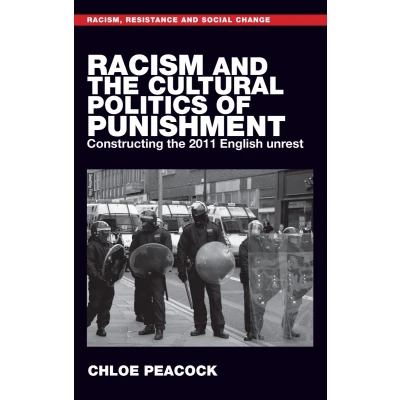
Racism and the cultural politics of punishment onalyses the 2011 English ‘riots’ and the state’s startlingly punitive response. Drawing on original research inside the criminal justice system, it exposes the denial and ignorance underpinning contemporary politics of law and order and offers insight into today's crisis. Racism and the cultural politics of punishment reveals the forms of disavowal, denial and obfuscation that are vital in allowing punitive and discriminatory state practices to appear unremarkable, inevitable and just. Focusing on the state’s startlingly severe response to the English ‘riots’ of 2011, the book explores the imaginations and narratives – about crime, criminals, the public and punishment – that served to normalise and legitimise the harsh and inequitable punishment of the ‘rioters’. Drawing on unique insights from interviews with prosecutors, sentencers, defence lawyers and policy-makers at the heart of the response, alongside analysis of media and political debates, Peacock shows how forms of ignorance were mobilised to justify and normalise this response, from amnesia about police racism and Britain’s long history of unrest, to distorted imaginations of public opinion about justice and widespread denial about the violence of the prison system. Taken together, these shared narratives worked to justify the state’s punitive reaction to the riots and to foreclose debate about the need for meaningful political and economic change in the wake of the unrest. Looking to recent events in Britain and beyond, Racism and the cultural politics of punishment offers timely insight into the cultural processes underpinning the punitive systems that disproportionately harm marginalised and racially minoritised communities. In a context where political obfuscation about structural racism demands sustained critical attention, the book offers insight into how such ignorance is produced, managed and sustained and offers valuable analysis for those seeking to challenge and dismantle it. Racism and the cultural politics of punishment examines the narratives, claims, and imaginaries that legitimise punitive and discriminatory criminal justice policies and practices. Centring on the state’s startlingly harsh response to the English ‘riots’ of 2011, the book combines unique insights from interviews with prosecutors, sentencers, defence lawyers, policymakers with analysis of media and political debates. It examines constructions of the unrest, its causes and how society should respond. In doing so, it explores the forms of ignorance and unknowing mobilised to justify the inequitable punishment of the 'rioters': from amnesia about police racism and Britain's long history of unrest to widespread denial of the violence of the prison system.Looking to recent events in Britain and beyond, the book offers timely insight into the cultural processes underpinning the punitive systems that disproportionately harm racially minoritised and marginalised communities.
 Prijshistorie
 * Prijshistorie bevat geen data van Amazon, Amazon Marketplace.
Prijzen voor het laatst bijgewerkt op:
 Gerelateerde resultaten
 Productspecificaties


