


€ 99,45 Gratis verzending

Uitgelicht
|
|
99,45 |
Naar shop
|

|
105,85 |
Naar shop
|

|
105,85 |
Naar shop
|
| VERGELIJK ALLE AANBIEDERS (3) | ||
 Beschrijving
Vergelijk aanbieders (3)
€ 99,45 Gratis verzending
€ 105,85 Gratis verzending
€ 105,85 Gratis verzending
Winkels met andere maten
Beschrijving
(1)
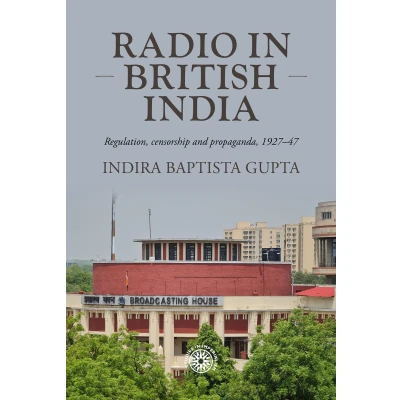
Focusing on the mercurial last two decades of British rule, the book critiques colonialism and imperialism through an investigation of broadcasting. Specifically, it details the evolution of official policy and implementation of administrative decisions on spoken word programmes. The book also investigates why in an atmosphere of autonomy in other fields radio was singled out for central control. This book argues that radio was the last in a line of technological and colonial interventions intended to promote British interests in India. Beginning with the introduction of radio in 1927 and situating itself in an era of decentralisation and political concession, this book contends that broadcasting was singled out for central control. Focusing on talk programmes, the book demonstrates the prescribing and proscribing nature of this control. Censorship and propaganda were the two core elements of colonial radio: ‘correct’ information about British rule in India was to be disseminated through propaganda, and censorship would prevent the creeping in of ‘incorrect’ information. Radio in British India considers significant practical aspects of Indian broadcasting, including ownership, policy, its monopolistic nature, changing official perceptions, evolution of talk programmes and its use as the chief vehicle for official propaganda. An analysis of the administrative and policy decisions taken by the Indian government in collaboration with the India Office and BBC demonstrates All India Radio's colonial clout, which enabled it to function as the key player for Allied propaganda, east of the Suez Canal. With a focus on the first twenty years of radio, the book traces the British promotion of a new technology, and the manner in which All India Radio developed into one of the most formidable institutions of colonial India. This book will argue that the British installed and controlled Indian radio, using it as a tool to prop up the colonial regime. Concessions made to Indian cultural styles, social aspirations or fluctuating needs of listeners had to fit foremostly into the colonial schema. Strikingly, the main edifice of Indian radio was modelled on the authoritarian Soviet pattern, both the semi-autonomous British and commercial American systems were rejected. The monograph is a thematic analysis of three activities relating to broadcasting in the last two decades of British rule. These relate to rules framed for regulating radio, implementing censorship and its use for publicity/propaganda. The progression of official policy relating to radio’s spoken word, especially news programmes, form the kernel of this enquiry. Contrastingly, other programmes, including music, comprising over 90 per cent of air time did not concern colonial officials and were allowed to develop on their own. Along with political factors at play, the social, cultural, technological and commercial pressures of a medium evolving in colonial settings are probed. In the politically charged atmosphere of pre-Independent India, programmes were centralised at Delhi and political matter was prohibited. Thus, radio was kept aloof from the currents of Indian nationalism and the national movement, but was an important vehicle for colonialism and imperialism.
 Prijshistorie
 * Prijshistorie bevat geen data van Amazon, Amazon Marketplace.
Prijzen voor het laatst bijgewerkt op:
 Gerelateerde resultaten
 Productspecificaties


