


€ 78,99 Gratis verzending

Uitgelicht
|
|
78,99 |
Naar shop
|

|
96,56 |
Naar shop
|
| VERGELIJK ALLE AANBIEDERS (2) | ||
 Beschrijving
Vergelijk aanbieders (2)
€ 78,99 Gratis verzending
€ 96,56 € 12,50 verzendkosten Totaal € 109,06
Winkels met andere maten
Beschrijving
(1)
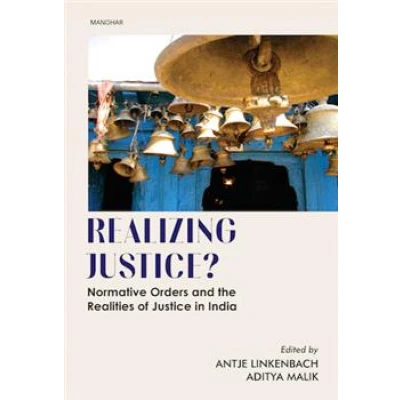
This book provides a penetrating, novel approach to an understanding of the ideas, concepts, meanings, and practices surrounding justice and its related concepts in the past and in contemporary India. How is justice conceptualized? Does it appear as a distinct, guiding normative principle in Indian intellectual traditions? How does it relate to other concepts like equality, and responsibility? What are the ground realities of justice in India? Are there competing normative orders? Are there forms of compliance, or are there discrepancies between normative rules of justice and the everyday practices of social actors? Are ideal rules ignored, modified, adapted in everyday practices according to the particular contextual realities? Could we identify particular arenas of (in)justice, like class, caste, gender, or natural resources? Is justice something that is continuously being ‘realized’ in shifting historical and social contexts? These questions compel us to reconsider interlinked fields essential to theorizations of modernity – the autonomous individual, extraordinary kinds of agency and knowledge, equality, aspiration, and choice. Such theorizations of the individual in the context of defining modernity and justice have deep implications in how the political world is organized and imagined that, in turn, inform the ideas of citizenship, democracy and secularism that underlie modern political systems such as the nation state, but also entrenched forms of institutional, social and personal violence, inequality, and discrimination.
 Productspecificaties
| EAN |
|
|---|---|
| Maat |
|
 Prijshistorie
 * Prijshistorie bevat geen data van Amazon.
Prijzen voor het laatst bijgewerkt op:
 Gerelateerde resultaten


