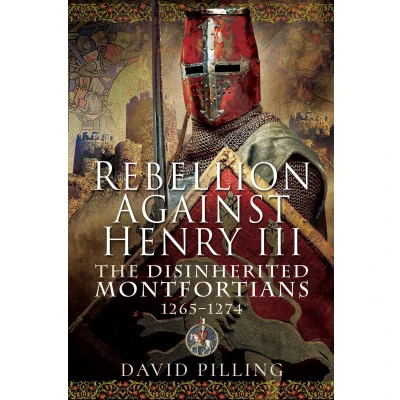

Rebellion Against Henry III

Prijzen vanaf
5,99

Uitgelicht

VERGELIJK ALLE AANBIEDERS (2)

Beschrijving

Bol Partner The 'Montfortian' civil wars in England lasted from 1259-67, though the death of Simon de Montfort and so many of his followers at the battle of Evesham in 1265 ought to have ended the conflict. In the aftermath of the battle, Henry III's decision to disinherit all the surviving Montfortians served to prolong the war for another two years. Hundreds of landless men took up arms again to defend their land and property: the redistribution of estates in the wake of Evesham occurred on a massive scale, as lands were either granted away by the king or simply taken by his supporters. The Disinherited, as they were known, defied the might of the Crown longer than anyone could have reasonably expected. They were scattered, outnumbered and out-resourced, with no real unifying figure after the death of Earl Simon, and suffered a number of heavy defeats. Despite all their problems and setbacks, they succeeded in forcing the king into a compromise. The Dictum of Kenilworth, published in 1266, acknowledged that Henry could not hope to defeat the Disinherited via military force alone. The purely military aspects of the revolt, including effective use of guerilla-type warfare and major actions such as the battle of Chesterfield, the siege of Kenilworth and the capture of London, will all be featured. Charismatic rebel leaders such as Robert de Ferrers, the 'wild and flighty' Earl of Derby, Sir John de Eyvill, 'the bold D'Eyvill' and others such as Sir Adam de Gurdon, David of Uffington and Baldwin Wake all receive a proper appraisal.

Vergelijk aanbieders (2)

Shop
Prijs
Verzendkosten
Totale prijs
5,99
Gratis
5,99
Naar shop
Gratis Shipping Costs
33,45
gebruikt
Gratis
33,45
Naar shop
Gratis Shipping Costs
Beschrijving (2)
Bol Partner

The 'Montfortian' civil wars in England lasted from 1259-67, though the death of Simon de Montfort and so many of his followers at the battle of Evesham in 1265 ought to have ended the conflict. In the aftermath of the battle, Henry III's decision to disinherit all the surviving Montfortians served to prolong the war for another two years. Hundreds of landless men took up arms again to defend their land and property: the redistribution of estates in the wake of Evesham occurred on a massive scale, as lands were either granted away by the king or simply taken by his supporters. The Disinherited, as they were known, defied the might of the Crown longer than anyone could have reasonably expected. They were scattered, outnumbered and out-resourced, with no real unifying figure after the death of Earl Simon, and suffered a number of heavy defeats. Despite all their problems and setbacks, they succeeded in forcing the king into a compromise. The Dictum of Kenilworth, published in 1266, acknowledged that Henry could not hope to defeat the Disinherited via military force alone. The purely military aspects of the revolt, including effective use of guerilla-type warfare and major actions such as the battle of Chesterfield, the siege of Kenilworth and the capture of London, will all be featured. Charismatic rebel leaders such as Robert de Ferrers, the 'wild and flighty' Earl of Derby, Sir John de Eyvill, 'the bold D'Eyvill' and others such as Sir Adam de Gurdon, David of Uffington and Baldwin Wake all receive a proper appraisal.

Bol

This study sheds light on the brave men who fought with Simon de Montfort in the 13th century English civil war—and continued the fight after his death. The Montfortian civil wars lasted from 1259 until 1267. The death of Simon de Montfort at the 1265 Battle of Evesham ought to have ended the conflict. But when Henry III disinherited all the surviving Montfortians, the war was prolonged for another two years. The redistribution of estates occurred on a massive scale, as lands were either granted away by the king or simply taken by his supporters. In response, hundreds of rebels took up arms to defend their property. "The Disinherited," as they were known, defied the might of the Crown longer than anyone could have imagined. Despite being leaderless, outnumbered, and out-resourced, they succeeded in forcing the king into a compromise. The Dictum of Kenilworth, published in 1266, acknowledged that Henry could not defeat the Disinherited with military force alone. In this military history, David Pilling examines the effective use of guerilla-type warfare, as well as major actions such as the battle of Chesterfield, the siege of Kenilworth, and the capture of London. Rebel leaders such as Robert de Ferrers, the Earl of Derby, Sir John de Eyvill, and Sir Adam de Gurdon, David of Uffington and Baldwin Wake are covered in lively detail.


Productspecificaties

EAN
  • 9781526763211
  • 9781526763204
Maat


Prijshistorie

Prijzen voor het laatst bijgewerkt op:

Uitgelichte Keuze
5,99
Naar shop
