
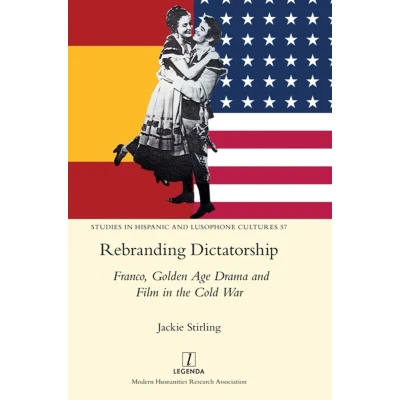
Rebranding Dictatorship: Franco, Golden Age Drama and Film in the Cold War: 57
Uitgelicht

|
111,00
109,00 |
Naar shop
|

|
120,40 |
Naar shop
|

|
120,40 |
Naar shop
|
| VERGELIJK ALLE AANBIEDERS (3) | ||
 Beschrijving
Bol
The start of the Cold War marks a pivotal moment for Franco's Spain when the internationally ostracised state rebrands itself as the anti-Soviet 'Sentinel of the West'. Between 1947 and 1954 four Spanish film adaptations of Golden Age drama epitomise the regime's changing relationship with the United States. In the first study to place these productions in the context of the Cold War, Jackie Stirling discusses the regime's deployment of these films, ranging from Hispanidad cultural diplomacy targeted at Juan Perón's Argentina to their role in the manipulation of two keys levers of Western democratic soft power, European film festivals and Hollywood. Drawing on extensive archival research including contemporary newsreels and film censorship, the author argues that these examples of Francoist cultural appropriation reward analysis in relation to feminist, post-colonial, star and queer theories; approaches by which she reviews and qualifies the totalitarian kitsch aesthetics of these films.Jackie Stirling is a film historian with a particular interest in Spanish cinema. She has taught Film Studies at Queen Mary University of London and is about to start a visiting fellowship at the Institute of Languages, Cultures and Societies at the School of Advanced Study, London University.


 Beschrijving
(1)
Beschrijving
(1)
The start of the Cold War marks a pivotal moment for Franco's Spain when the internationally ostracised state rebrands itself as the anti-Soviet 'Sentinel of the West'. Between 1947 and 1954 four Spanish film adaptations of Golden Age drama epitomise the regime's changing relationship with the United States. In the first study to place these productions in the context of the Cold War, Jackie Stirling discusses the regime's deployment of these films, ranging from Hispanidad cultural diplomacy targeted at Juan Perón's Argentina to their role in the manipulation of two keys levers of Western democratic soft power, European film festivals and Hollywood. Drawing on extensive archival research including contemporary newsreels and film censorship, the author argues that these examples of Francoist cultural appropriation reward analysis in relation to feminist, post-colonial, star and queer theories; approaches by which she reviews and qualifies the totalitarian kitsch aesthetics of these films.Jackie Stirling is a film historian with a particular interest in Spanish cinema. She has taught Film Studies at Queen Mary University of London and is about to start a visiting fellowship at the Institute of Languages, Cultures and Societies at the School of Advanced Study, London University.
 Productspecificaties
 Prijshistorie
* Prijshistorie bevat geen data van Amazon, Amazon Marketplace.
Prijzen voor het laatst bijgewerkt op:
 Gerelateerde resultaten


