


€ 17,00 € 2,99 verzendkosten Totaal € 19,99

Gesponsorde links
|
|
17,00 |
Naar shop
|

|
17,52 |
Naar shop
|
| VERGELIJK ALLE AANBIEDERS (2) | ||
 Beschrijving
Vergelijk aanbieders (2)
Gesponsorde links · Sommige shops betalen ons een vergoeding
€ 17,00 € 2,99 verzendkosten Totaal € 19,99
€ 17,52 Gratis verzending
Winkels met andere maten
Beschrijving
(1)
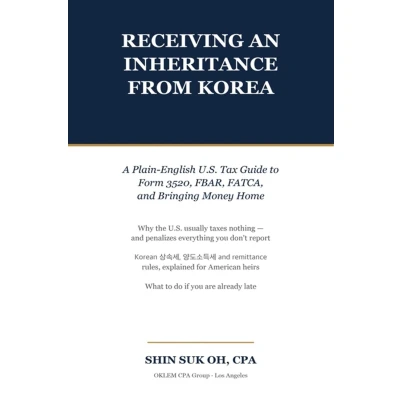
Your parent in Korea has passed away, and money or an apartment is coming your way. What does the IRS need to know, and when? Most Korean-Americans get this wrong. Not because the tax is high (there is usually no U.S. tax on the inheritance itself) but because the reporting penalties are brutal: up to 25 percent of the inheritance for a late Form 3520, and over $16,000 per year for a missed FBAR. Written by a practicing U.S. CPA in Los Angeles who handles these cases every year, this plain-English guide walks you through: - Whether an inheritance or gift from Korea is taxable in the United States (short answer: usually not, and here is why) - Form 3520: the $100,000 threshold, the due date, the aggregation rule that catches families, and the penalty - FBAR (FinCEN 114) and Form 8938: when a Korean bank account, housing subscription account, brokerage account, or insurance policy must be reported - Korean inheritance tax (sangsokse) versus U.S. rules, and why you will not be taxed twice - Selling inherited Korean real estate: basis step-up, Korean capital gains tax, the currency problem, and the foreign tax credit - The PFIC trap hiding in Korean mutual funds and ETFs, and what to do about inherited insurance - Wiring the money home under Korea's 2026 remittance rules, and the structuring mistake that turns a legal inheritance into a federal crime - Who files what when the heirs include green card holders, students, dual citizens, and relatives in Korea >Includes a deadline checklist for both countries, a Korean-English glossary of the terms your family and the Korean bank will use, and a field-by-field walkthrough of Form 3520 Part IV. Facts verified against IRS, FinCEN, Treasury, and Korean National Tax Service sources as of September 2026. General information, not individual tax advice.
 Prijshistorie
* Prijshistorie bevat geen data van Amazon.
Prijzen voor het laatst bijgewerkt op:
 Gerelateerde resultaten
 Productspecificaties


