


€ 188,36 € 176,99 Gratis verzending

Uitgelicht
|
|
188,36
176,99 |
Naar shop
|

|
299,99 |
Naar shop
|
| VERGELIJK ALLE AANBIEDERS (2) | ||
 Beschrijving
Vergelijk aanbieders (2)
€ 188,36 € 176,99 Gratis verzending
€ 299,99 Gratis verzending
Winkels met andere maten
Beschrijving
(1)
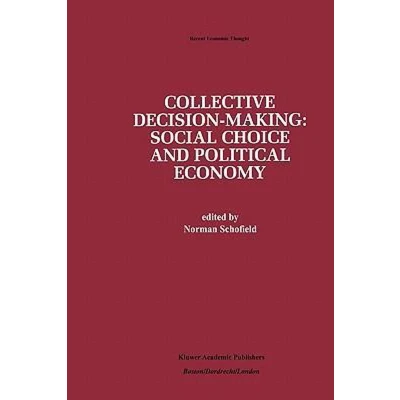
In the last decade the techniques of social choice theory, game theory and positive political theory have been combined in interesting ways so as to pro vide a common framework for analyzing the behavior of a developed political economy. In the last decade the techniques of social choice theory, game theory and positive political theory have been combined in interesting ways so as to pro vide a common framework for analyzing the behavior of a developed political economy. Social choice theory itself grew out of the innovative attempts by Ken neth Arrow (1951) and Duncan Black (1948, 1958) to extend the range of economic theory in order to deal with collective decision-making over public goods. Later work, by William Baumol (1952), and James Buchanan and Gordon Tullock (1962), focussed on providing an "economic" interpretation of democratic institutions. In the same period Anthony Downs (1957) sought to model representative democracy and elections while William Riker (1962) made use of work in cooperative game theory (by John von Neumann and Oscar Morgenstern, 1944) to study coalition behavior. In my view, these "rational choice" analyses of collective decision-making have their antecedents in the arguments of Adam Smith (1759, 1776), James Madison (1787) and the Marquis de Condorcet (1785) about the "design" of political institutions. In the introductory chapter to this volume I briefly describe how some of the current normative and positive aspects of social choice date back to these earlier writers.
 Productspecificaties
| EAN |
|
|---|---|
| Maat |
|
 Prijshistorie
Prijzen voor het laatst bijgewerkt op:
 Gerelateerde resultaten


