


€ 129,00 Gratis verzending

Uitgelicht
|
|
129,00 |
Naar shop
|

|
139,09 |
Naar shop
|

|
139,09 |
Naar shop
|
| VERGELIJK ALLE AANBIEDERS (3) | ||
 Beschrijving
Vergelijk aanbieders (3)
€ 129,00 Gratis verzending
€ 139,09 Gratis verzending
€ 139,09 Gratis verzending
Winkels met andere maten
Beschrijving
(1)
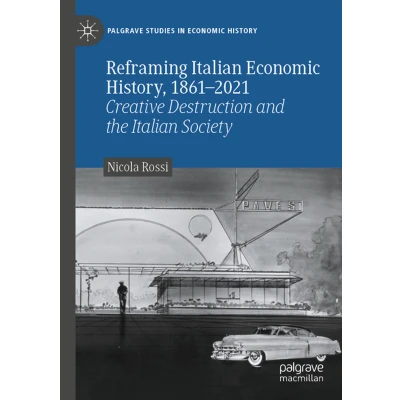
This book surveys the development of the Italian economy over the 150 years since unification, integrating economic analysis with an economic and social history of Italian society. The book challenges several key assumptions about the growth of the Italian economy, including the notion that Italy has ‘caught up’ with its main Western partners and arguing that in long-run perspective the Italian economy has performed disappointingly. In particular, the book highlights how the role of cultural values, beliefs and preferences are just as important as institutions and institutional change in explaining the trajectory of the economy, arguing that a widespread ‘growth-averse’ culture exists in Italian society that diverges from the dominant market paradigms of the Western world. Rather than treating the twenty years after WWII – the period of rapid growth known as Italy’s ‘economic miracle’ years – as an indicator of Italy’s success, the author analyses these years as an anomaly where capitalist processes like creative destruction and innovism were briefly permitted to flourish. The book draws out key questions, for example exploring why institutional reforms have not led to sustained rates of growth, and why other markers of quality of life have improved in Italy while economic performance has remained slow. This book will be a fascinating read for scholars of economics and economic history, as well as non-specialist readers looking for a comprehensive understanding of Italian socio-economic conditions since the country's unification.
 Prijshistorie
 * Prijshistorie bevat geen data van Amazon, Amazon Marketplace.
Prijzen voor het laatst bijgewerkt op:
 Gerelateerde resultaten
 Productspecificaties


