

€ 11,91 Gratis verzending

Gesponsorde links
|
|
11,91 |
Naar shop
|

|
11,91 |
Naar shop
|

|
12,00 |
Naar shop
|
| VERGELIJK ALLE AANBIEDERS (3) | ||
 Beschrijving
Vergelijk aanbieders (3)
Gesponsorde links · Sommige shops betalen ons een vergoeding
€ 11,91 Gratis verzending
€ 11,91 Gratis verzending
€ 12,00 € 2,99 verzendkosten Totaal € 14,99
Winkels met andere maten
Beschrijving
(1)
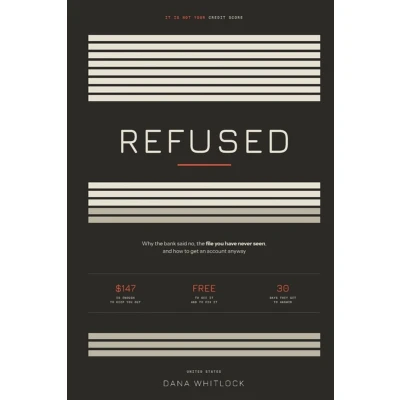
Almost everyone turned down for a checking account assumes the reason is their credit score. It usually is not.Banks screening deposit account applications mostly do not use the credit bureaus you have heard of. They use ChexSystems and Early Warning Services, and those agencies hold a file on you that you have almost certainly never seen.This is the plain-English guide to that file, and to the way back into the banking system.It prints what the Fair Credit Reporting Act actually says, section by section: - the adverse action notice the bank had to send you, and the four things to take off it;- your free copy of the report, and the 60-day window the notice is required to flag;- the free annual disclosure, and the toll-free telephone number the Act requires these agencies to run for the request;- the free reasonable reinvestigation, and the 30 days they get to answer it;- and the seven-year cap on adverse information, against the five years ChexSystems actually uses.Then it does the work. Every item on your file goes into one of three piles: wrong, owed, or accurate-and-old. Each pile has a different route, and using the wrong route is how people lose months. There is a chapter on the difference between an entry being deleted and its status being updated, and on exactly what to get in writing before any money moves.And then the part nobody else writes: getting banked while the file is still imperfect. Second chance accounts, and what to check before signing. Bank On certified accounts, whose published standards include no overdraft or non-sufficient funds fees, which is the thing that put most readers here in the first place. Credit unions, and how joining actually works.Every letter you need is written out to copy: the file request, the dispute, the letter to the bank that reported it.It is honest about the limits. Nobody can remove an accurate item. No service has a route the law does not already give you free. Some banks will keep saying no until an unpaid balance clears or ages off, and that is in chapter 26 rather than the small print.The amounts that do this to people are small. A negative balance of a couple of hundred dollars is enough to keep somebody out of the banking system for five years, mostly because nobody ever told them the file existed.United States. Information, not legal or financial advice. Current as of August 2026.
 Prijshistorie
* Prijshistorie bevat geen data van Amazon, Amazon Marketplace.
Prijzen voor het laatst bijgewerkt op:
 Gerelateerde resultaten
 Productspecificaties


