
Religious Cultures of African and Diaspora People- Forms Worship
Uitgelicht

|
29,99 |
Naar shop
|

|
30,45 |
Naar shop
|

|
30,45 |
Naar shop
|
| VERGELIJK ALLE AANBIEDERS (3) | ||
 Beschrijving
Bol
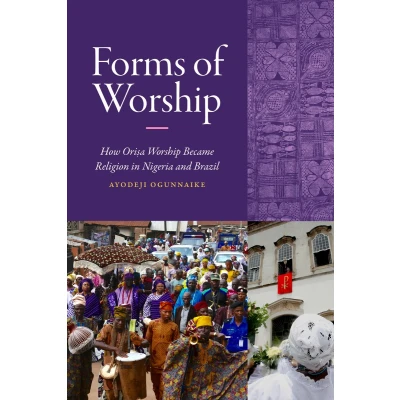
The worship of Yoruba deities known as oriṣa is commonly understood as an indigenous African religion, but Ayodeji Ogunnaike argues that these traditions initially differed from the modern Western concept of religion. In Forms of Worship, Ogunnaike analyzes how the configuration of oriṣa worship has changed across the Yoruba diaspora and homeland. As the meaning of the Yoruba word ẹsin, usually translated as “religion,” is closer to “form of worship,” he examines how reorienting understandings of oriṣa traditions as multiple forms of worship changes how religious identity, practice, and dynamics can be understood in contemporary and historical perspectives. By developing indigenous models for religious phenomena, Ogunnaike accounts for Yoruba cultural dynamics, including the high degree of religious harmony, syncretism, and interaction prevalent both in Nigeria and Brazil. Furthermore, he tracks the subtle and largely unperceived shift in oriṣa worship toward a more modern, closed, and rigid conception of religion and its resulting complications. Forms of Worship demonstrates how the advent of Western religious rigidity regarding practice and identity has led to rising religious tensions and fragmentation.


 Beschrijving
(1)
Beschrijving
(1)
The worship of Yoruba deities known as oriṣa is commonly understood as an indigenous African religion, but Ayodeji Ogunnaike argues that these traditions initially differed from the modern Western concept of religion. In Forms of Worship, Ogunnaike analyzes how the configuration of oriṣa worship has changed across the Yoruba diaspora and homeland. As the meaning of the Yoruba word ẹsin, usually translated as “religion,” is closer to “form of worship,” he examines how reorienting understandings of oriṣa traditions as multiple forms of worship changes how religious identity, practice, and dynamics can be understood in contemporary and historical perspectives. By developing indigenous models for religious phenomena, Ogunnaike accounts for Yoruba cultural dynamics, including the high degree of religious harmony, syncretism, and interaction prevalent both in Nigeria and Brazil. Furthermore, he tracks the subtle and largely unperceived shift in oriṣa worship toward a more modern, closed, and rigid conception of religion and its resulting complications. Forms of Worship demonstrates how the advent of Western religious rigidity regarding practice and identity has led to rising religious tensions and fragmentation.
 Productspecificaties
 Prijshistorie
* Prijshistorie bevat geen data van Amazon, Amazon Marketplace.
Prijzen voor het laatst bijgewerkt op:
 Gerelateerde resultaten


