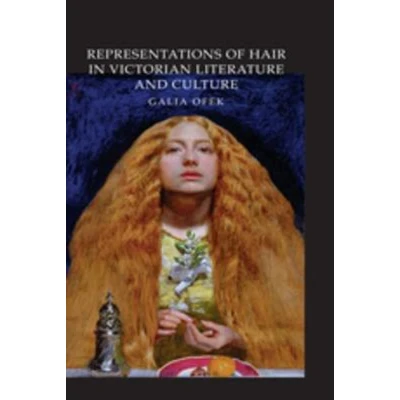

Representations Of Hair In Victorian Literature And Culture

Prijzen vanaf
74,08

Uitgelicht

VERGELIJK ALLE AANBIEDERS (2)

Beschrijving

Bol Partner Elucidates the historical, artistic, literary, and theoretical meanings of the Victorians' preoccupation with hair. This work shows how changing patterns of power relations between women and patriarchy are rendered anew when viewed through the lens of Victorian hair codes and imagery during the second half of the nineteenth century. Galia Ofek's wide-ranging study elucidates the historical, artistic, literary, and theoretical meanings of the Victorians' preoccupation with hair. Victorian writers and artists, Ofek argues, had a well-developed awareness of fetishism as an overinvestment of value in a specific body part and were fully cognizant of hair's symbolic resonance and its value as an object of commerce. In particular, they were increasingly alert to the symbolic significance of hairstyling. Among the writers and artists Ofek considers are Elizabeth Gaskell, George Eliot, Margaret Oliphant, Charles Darwin, Anthony Trollope, Elizabeth Barrett Browning, Eliza Lynn Linton, Mary Elizabeth Braddon, Herbert Spencer, Dante Gabriel Rossetti, Edward Burne-Jones, Charles Dickens, Thomas Hardy, and Aubrey Beardsley. By examining fiction, poetry, anthropological and scientific works, newspaper reviews and advertisements, correspondence, jewellery, paintings, and cartoons, Ofek shows how changing patterns of power relations between women and patriarchy are rendered anew when viewed through the lens of Victorian hair codes and imagery during the second half of the nineteenth century.

Vergelijk aanbieders (2)

Shop
Prijs
Verzendkosten
Totale prijs
74,08
Gratis
74,08
Naar shop
Gratis Shipping Costs
94,73
gebruikt
Gratis
94,73
Naar shop
Gratis Shipping Costs
Beschrijving (2)
Bol Partner

Elucidates the historical, artistic, literary, and theoretical meanings of the Victorians' preoccupation with hair. This work shows how changing patterns of power relations between women and patriarchy are rendered anew when viewed through the lens of Victorian hair codes and imagery during the second half of the nineteenth century. Galia Ofek's wide-ranging study elucidates the historical, artistic, literary, and theoretical meanings of the Victorians' preoccupation with hair. Victorian writers and artists, Ofek argues, had a well-developed awareness of fetishism as an overinvestment of value in a specific body part and were fully cognizant of hair's symbolic resonance and its value as an object of commerce. In particular, they were increasingly alert to the symbolic significance of hairstyling. Among the writers and artists Ofek considers are Elizabeth Gaskell, George Eliot, Margaret Oliphant, Charles Darwin, Anthony Trollope, Elizabeth Barrett Browning, Eliza Lynn Linton, Mary Elizabeth Braddon, Herbert Spencer, Dante Gabriel Rossetti, Edward Burne-Jones, Charles Dickens, Thomas Hardy, and Aubrey Beardsley. By examining fiction, poetry, anthropological and scientific works, newspaper reviews and advertisements, correspondence, jewellery, paintings, and cartoons, Ofek shows how changing patterns of power relations between women and patriarchy are rendered anew when viewed through the lens of Victorian hair codes and imagery during the second half of the nineteenth century.

Bol

Galia Ofek's wide-ranging study elucidates the historical, artistic, literary, and theoretical meanings of the Victorians' preoccupation with hair. Victorian writers and artists, Ofek argues, had a well-developed awareness of fetishism as an overinvestment of value in a specific body part and were fully cognizant of hair's symbolic resonance and its value as an object of commerce. In particular, they were increasingly alert to the symbolic significance of hairstyling. Among the writers and artists Ofek considers are Elizabeth Gaskell, George Eliot, Margaret Oliphant, Charles Darwin, Anthony Trollope, Elizabeth Barrett Browning, Eliza Lynn Linton, Mary Elizabeth Braddon, Herbert Spencer, Dante Gabriel Rossetti, Edward Burne-Jones, Charles Dickens, Thomas Hardy, and Aubrey Beardsley. By examining fiction, poetry, anthropological and scientific works, newspaper reviews and advertisements, correspondence, jewellery, paintings, and cartoons, Ofek shows how changing patterns of power relations between women and patriarchy are rendered anew when viewed through the lens of Victorian hair codes and imagery during the second half of the nineteenth century.


Productspecificaties

EAN
  • 9781351904186
  • 9780754661610
Maat


Prijshistorie

Prijzen voor het laatst bijgewerkt op:

Uitgelichte Keuze
74,08
Naar shop
