


€ 15,00 € 2,99 verzendkosten Totaal € 17,99

Gesponsorde links
|
|
15,00 |
Naar shop
|

|
16,25 |
Naar shop
|

|
16,25 |
Naar shop
|
| VERGELIJK ALLE AANBIEDERS (3) | ||
 Beschrijving
Vergelijk aanbieders (3)
Gesponsorde links · Sommige shops betalen ons een vergoeding
€ 15,00 € 2,99 verzendkosten Totaal € 17,99
€ 16,25 Gratis verzending
€ 16,25 Gratis verzending
Winkels met andere maten
Beschrijving
(1)
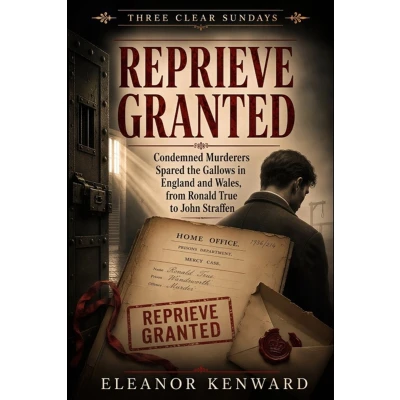
Between 1900 and 1965, roughly two in five men condemned to death in England and Wales were not executed. Nobody has written about them.The men who were hanged are counted, dated and named in a dozen reference books. The men who were spared are a line in a register. They went to prison for a period nobody would state, most of them came out again after ten years or so, and they lived another forty years in Bolton or Coventry or Swansea without anybody outside their families knowing what they had been.Not one of them was ever told why.Drawing on the Royal Commission on Capital Punishment, Hansard and the surviving Home Office record, Reprieve Granted follows the men who walked out of the condemned cell alive - and the machinery that decided it.Ronald True, whose family bought the psychiatrists whose evidence took him to Broadmoor, in the same month that a poor pantry boy of eighteen was hanged three days before his reprieve was announced. James Camb, condemned for a killing at sea with no body and no cause of death, who lived because of a division in the House of Commons three weeks later. Michael Davies, one of six young men charged after a knife fight on Clapham Common, ninety-two days in the condemned cell, released after seven years and never pardoned. John Straffen, spared as too feeble-minded to hang and then given the longest prison term served in British legal history. And Christopher Simcox, twice sentenced to death and twice reprieved.What emerges is not a story about mercy. It is the account of a power exercised by one man alone, in a room in Whitehall, at the rate of a case a fortnight for sixty-four years - with no published criteria, no hearing, no appeal, and no reasons given to anybody, ever.The men who died were told nothing. So were the men who lived.About the seriesThree Clear Sundays examines capital punishment in England and Wales from 1900 to 1965 through the people it was used on. Condemned Women covers the 115 women sentenced to hang. Mercy Refused follows fifteen men to the scaffold and asks why they were not spared. Reprieve Granted takes the same five grounds of mercy in the same order as Mercy Refused, from the other side - the cases where they worked.The two books are a pair and were designed as one. This one can be read on its own.
 Prijshistorie
* Prijshistorie bevat geen data van Amazon, Amazon Marketplace.
Prijzen voor het laatst bijgewerkt op:
 Gerelateerde resultaten
 Productspecificaties


