


€ 109,00 Gratis verzending

Uitgelicht
|
|
109,00 |
Naar shop
|
| VERGELIJK ALLE AANBIEDERS (1) | ||
 Beschrijving
Vergelijk aanbieders (1)
€ 109,00 Gratis verzending
Winkels met andere maten
Beschrijving
(1)
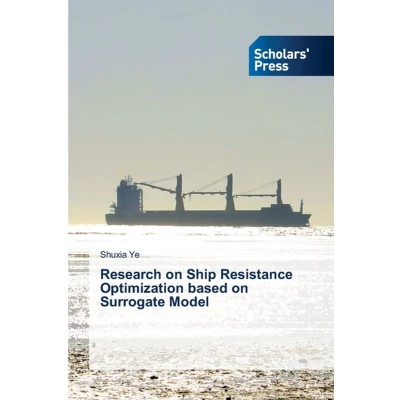
Part I primarily investigates ship resistance optimization. Addressing the current limitation of using only one agent model combined with evolutionary algorithms for optimization, it takes the DTMB5415 ship as the research subject. Based on CFD numerical simulation calculations to construct the dataset, it employs nine optimization framework methods composed of three agent models and three evolutionary algorithms to study ship resistance numerical prediction and hull form optimization. Part II develops an error-classification-based surrogate model and employs the improved whale algorithm NLWOA to investigate hull resistance under varying bulbous bow parameters. It addresses the high computational time and low efficiency issues inherent in traditional computational fluid dynamics (CFD).
 Productspecificaties
| EAN |
|
|---|---|
| Maat |
|
 Prijshistorie
 Prijzen voor het laatst bijgewerkt op:
 Gerelateerde resultaten


