

€ 38,74 Gratis verzending

Uitgelicht
|
|
38,74 |
Naar shop
|

|
38,74 |
Naar shop
|

|
42,95 |
Naar shop
|
| VERGELIJK ALLE AANBIEDERS (4) | ||
 Beschrijving
Vergelijk aanbieders (4)
€ 38,74 Gratis verzending
€ 38,74 Gratis verzending
gebruikt € 42,95 Gratis verzending

€ 45,99 Gratis verzending
Winkels met andere maten
Beschrijving
(2)
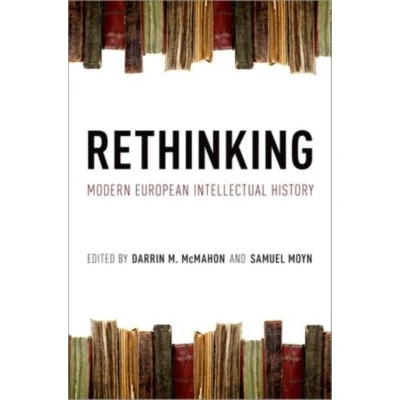
This book is a collection of essays by leading practitioners of modern European intellectual history, reflecting on the theoretical and methodological underpinnings of the field. The essays each attempt to assess their respective disciplines, giving an account of their development and theoretical evolution, while also reflecting on current problems, challenges, and possibilities. In relative terms, intellectual history is currently enjoying a moment of prominence and self-confidence greater than it has known in decades. Yet surprisingly for a field whose practitioners pride themselves on intellectual self-awareness, its star may have risen along with a decline in self-reflection. Few recent theoretical statements have attempted to "justify" intellectual history, to explain what makes its practice worthwhile and methodologically sound. This situation is ironic. The time of bitter and divisive disputes about the place of intellectual history in the humanities may be a living memory, but it is an improbably distant one. Everyone seems to be getting along these days: intellectual historians with other kinds of historians, and intellectual historians with one another. Yet only a generation ago, the field was faced with marginalization - if not extinction - by powerful external forces, which imposed a kind of exile, prompting a period of intense theoretical self-examination and contention. Now intellectual history is ascendant in the profession, and a kind of mutual admiration, almost to the point of complacency, flourishes where bitter polemics once festered. To reflect on this extraordinary reversal and to chart future directions in the field are the purposes of this collection of essays. They appear at an "interim " moment because the field of European intellectual history stands at a critical juncture. Despite recent successes, intellectual historians can claim today no widespread agreement about how to conduct their work, and they often seem to lack the will to argue out the alternatives. The situation is comfortable. Yet the absence of self-reflection and theoretical contest - which were once compulsory, and arguably taken to excess - risks devolving into a celebration of eclecticism under a large and cozy tent. If eclecticism is a risk, it is also an opportunity, which offers to intellectual historians the prospect of enriching their own field and the broader practice of history through novel openings and exchange. A wider disciplinary world beckons, as does a frequently elusive interdisciplinary (and international) space. Intellectual historians have an important role to play in fostering such spaces, and European intellectual historians, in particular, have an interest in doing so at a moment when the study of "Europe" seems increasingly parochial to many when not connected to the faraway lands Europeans once ruled and where their ideas have long traveled. In this global and globalizing age, at this juncture for the field, it is appropriate to step back from practice to engage in a bout of theoretical reflection. The time is right to take stock of where European intellectual history has been, to assess where it is now, and to reflect on future possibilities.
BolModern European intellectual history is thriving as never before. It has recovered from an era in which other trends like social and cultural history threatened to marginalize it. But in spite of enjoying a contemporary renaissance, the field has lost touch with the tradition of debating why and how to study ideas and thus lacks both a well-articulated set of purposes and a range of arguments for exactly what it means to pursue those purposes. This volume revives that tradition. Recalling past attempts to showcase the diversity and differentiation of modern European intellectual history, this volume also documents how much has changed in recent decades. Some authors are much readier to defend a history of ideas practiced over the long term - once the defining sin of the field. Others go so far as to insist on how ideas are always open to reappropriation and reevaluation beyond their original contexts - suggesting that it is an error to reduce the ideas to those contexts. Others still argue that, under threat from trends like social history, intellectual historians have forsaken any attempt to resolve for themselves how ideas are socially embodied. The volume also registers old and new trends in history that have affected the study of ideas, including the history of science, the history of academic disciplines, the history of psychology and "self," international and global history, and women's and gender history.
 Productspecificaties
| Merk | Oxford University Press |
|---|---|
| EAN |
|
| Maat |
|
 Prijshistorie
 * Prijshistorie bevat geen data van Amazon, Amazon Marketplace.
Prijzen voor het laatst bijgewerkt op:
 Gerelateerde resultaten


