
Rethinking Peace and Conflict Studies A Lacanian Hegelian Perspective on
Uitgelicht

|
49,99 |
Naar shop
|
| VERGELIJK ALLE AANBIEDERS (1) | ||
 Beschrijving
Bol
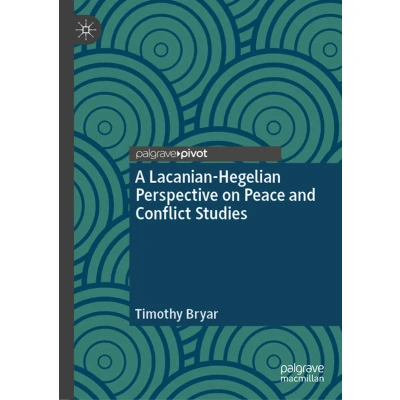
This book takes a ground-breaking approach to peace theory and practice at a time of multiplying global crises. It draws on the Lacanian-Hegelian dialectical materialism to rethink the way we think peace, conflict and violence as amongst multiple, overlapping crises including climate change, contemporary conflict, the threat of nuclear war, pandemics, the rise of far-right racism and growing class divisions. Such an approach may seem surprising. While Lacanian-Hegelian scholars have provided analyses of contemporary conflicts including Russia’s war on Ukraine and Israel’s war against Hamas, in doing so they have also made pointedly critiqued the theory and practice of peace. Rather than simply defend peace theory and practice, the book uses these critiques as the basis for rethinking peace and conflict. Therefore, the book occupies a unique position by being the first to apply Lacanian-Hegelian dialectical materialism to peace and conflict theory and practice broadlyIn doing so, it provides scholars, students and practitioners with new concepts and tools to rethink peace theory and practice – and to engage with politics in an age fraught with crises. Timothy Bryar as an independent researcher and writer based in Suva, Fiji. He has more than 15 years experience in the Pacific Islands region, with expertise in conflict prevention, peacebuilding, geopolitics and strategic policy. This book takes a ground-breaking approach to peace theory and practice at a time of multiplying global crises. It draws on the Lacanian-Hegelian dialectical materialism to rethink the way we think peace, conflict and violence as amongst multiple, overlapping crises including climate change, contemporary conflict, the threat of nuclear war, pandemics, the rise of far-right racism and growing class divisions. Such an approach may seem surprising. While Lacanian-Hegelian scholars have provided analyses of contemporary conflicts including Russia’s war on Ukraine and Israel’s war against Hamas, in doing so they have also made pointedly critiqued the theory and practice of peace. Rather than simply defend peace theory and practice, the book uses these critiques as the basis for rethinking peace and conflict. Therefore, the book occupies a unique position by being the first to apply Lacanian-Hegelian dialectical materialism to peace and conflict theory and practice broadlyIn doing so, it provides scholars, students and practitioners with new concepts and tools to rethink peace theory and practice – and to engage with politics in an age fraught with crises.


Vergelijk aanbieders (1)

 Beschrijving
(1)
Beschrijving
(1)
This book takes a ground-breaking approach to peace theory and practice at a time of multiplying global crises. It draws on the Lacanian-Hegelian dialectical materialism to rethink the way we think peace, conflict and violence as amongst multiple, overlapping crises including climate change, contemporary conflict, the threat of nuclear war, pandemics, the rise of far-right racism and growing class divisions. Such an approach may seem surprising. While Lacanian-Hegelian scholars have provided analyses of contemporary conflicts including Russia’s war on Ukraine and Israel’s war against Hamas, in doing so they have also made pointedly critiqued the theory and practice of peace. Rather than simply defend peace theory and practice, the book uses these critiques as the basis for rethinking peace and conflict. Therefore, the book occupies a unique position by being the first to apply Lacanian-Hegelian dialectical materialism to peace and conflict theory and practice broadlyIn doing so, it provides scholars, students and practitioners with new concepts and tools to rethink peace theory and practice – and to engage with politics in an age fraught with crises. Timothy Bryar as an independent researcher and writer based in Suva, Fiji. He has more than 15 years experience in the Pacific Islands region, with expertise in conflict prevention, peacebuilding, geopolitics and strategic policy. This book takes a ground-breaking approach to peace theory and practice at a time of multiplying global crises. It draws on the Lacanian-Hegelian dialectical materialism to rethink the way we think peace, conflict and violence as amongst multiple, overlapping crises including climate change, contemporary conflict, the threat of nuclear war, pandemics, the rise of far-right racism and growing class divisions. Such an approach may seem surprising. While Lacanian-Hegelian scholars have provided analyses of contemporary conflicts including Russia’s war on Ukraine and Israel’s war against Hamas, in doing so they have also made pointedly critiqued the theory and practice of peace. Rather than simply defend peace theory and practice, the book uses these critiques as the basis for rethinking peace and conflict. Therefore, the book occupies a unique position by being the first to apply Lacanian-Hegelian dialectical materialism to peace and conflict theory and practice broadlyIn doing so, it provides scholars, students and practitioners with new concepts and tools to rethink peace theory and practice – and to engage with politics in an age fraught with crises.
 Productspecificaties
| EAN |
|
|---|---|
| Maat |
|
 Prijshistorie
Prijzen voor het laatst bijgewerkt op:
 Gerelateerde resultaten


