


€ 43,99 Gratis verzending

Uitgelicht
|
|
43,99 |
Naar shop
|

|
45,79 |
Naar shop
|
| VERGELIJK ALLE AANBIEDERS (2) | ||
 Beschrijving
Vergelijk aanbieders (2)
€ 43,99 Gratis verzending
€ 45,79 Gratis verzending
Winkels met andere maten
Beschrijving
(1)
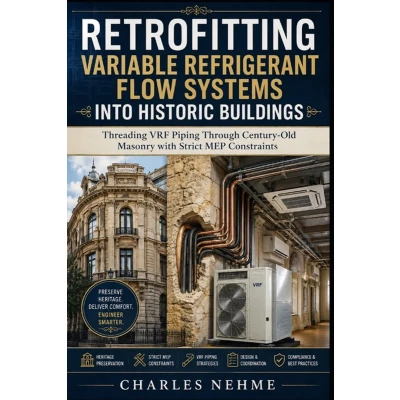
Historic buildings present a paradox: their solid masonry construction, thick walls, and thermal mass offer natural resilience to climate extremes, yet lack the mechanical conditioning expected by modern occupants. Retrofitting heating and cooling into century-old structures demands surgical precision-inserting conditioned air and refrigerant lines through load-bearing timber frames and ornamental plaster without compromising structural integrity or aesthetic patrimony.Variable Refrigerant Flow (VRF) systems have emerged as a compelling solution because they: - Eliminate large central plants and associated ductwork-replacing them with distributed slim-profile indoor units and intelligent zone controllers- Permit heat recovery between simultaneously heated and cooled spaces, boosting seasonal efficiency in adaptive reuse scenarios- Offer granular control at the zone level, preserving thermal zones that align with the building's historic room geometry- Scale gracefully-phased deployment floor-by-floor minimizes disruption during adaptive reuse occupationThis book synthesizes technical guidance for MEP professionals, architects, and facility managers navigating the intersection of modern climate control and historic preservation. We address the invasive challenge of routing refrigerant piping through masonry and timber while maintaining thermal integrity and respecting architectural heritage.
 Prijshistorie
 * Prijshistorie bevat geen data van Amazon.
Prijzen voor het laatst bijgewerkt op:
 Gerelateerde resultaten
 Productspecificaties


