
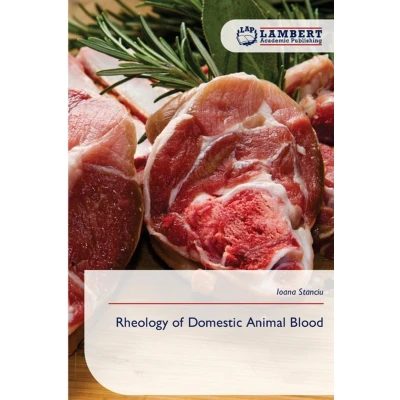
Rheology of Domestic Animal Blood
Uitgelicht

|
68,99 |
Naar shop
|
| VERGELIJK ALLE AANBIEDERS (1) | ||
 Beschrijving
Bol
The book titled "Rheology of Domestic Animal Blood" is structured into four chapters. Rheology, the science of deformation and flow of matter, focuses on the behavior of complex fluids such as blood. In biological systems, blood functions as a non-Newtonian fluid, meaning its viscosity varies with the shear rate. The rheological properties of blood are vital for maintaining proper tissue perfusion and are influenced by multiple factors, including hematocrit, plasma viscosity, red blood cell (RBC) deformability, and aggregation. In domestic animals-such as cattle, horses, sheep, goats, pigs, and dogs-blood rheology has become increasingly important in both clinical and research contexts. Species-specific differences in blood composition and flow characteristics can significantly affect the diagnosis, management, and treatment of circulatory and metabolic disorders. For instance, horses generally exhibit higher blood viscosity than dogs due to variations in hematocrit and RBC properties, while ruminants like cattle and sheep display distinctive adaptations linked to their digestive physiology and oxygen transport requirements.


Vergelijk aanbieders (1)

 Beschrijving
(1)
Beschrijving
(1)
The book titled "Rheology of Domestic Animal Blood" is structured into four chapters. Rheology, the science of deformation and flow of matter, focuses on the behavior of complex fluids such as blood. In biological systems, blood functions as a non-Newtonian fluid, meaning its viscosity varies with the shear rate. The rheological properties of blood are vital for maintaining proper tissue perfusion and are influenced by multiple factors, including hematocrit, plasma viscosity, red blood cell (RBC) deformability, and aggregation. In domestic animals-such as cattle, horses, sheep, goats, pigs, and dogs-blood rheology has become increasingly important in both clinical and research contexts. Species-specific differences in blood composition and flow characteristics can significantly affect the diagnosis, management, and treatment of circulatory and metabolic disorders. For instance, horses generally exhibit higher blood viscosity than dogs due to variations in hematocrit and RBC properties, while ruminants like cattle and sheep display distinctive adaptations linked to their digestive physiology and oxygen transport requirements.
 Productspecificaties
| EAN |
|
|---|---|
| Maat |
|
 Prijshistorie
Prijzen voor het laatst bijgewerkt op:
 Gerelateerde resultaten


