


€ 18,00 € 2,99 verzendkosten Totaal € 20,99

Gesponsorde links
|
|
18,00 |
Naar shop
|

|
19,25 |
Naar shop
|

|
19,25 |
Naar shop
|
| VERGELIJK ALLE AANBIEDERS (3) | ||
 Beschrijving
Vergelijk aanbieders (3)
Gesponsorde links · Sommige shops betalen ons een vergoeding
€ 18,00 € 2,99 verzendkosten Totaal € 20,99
€ 19,25 Gratis verzending
€ 19,25 Gratis verzending
Winkels met andere maten
Beschrijving
(1)
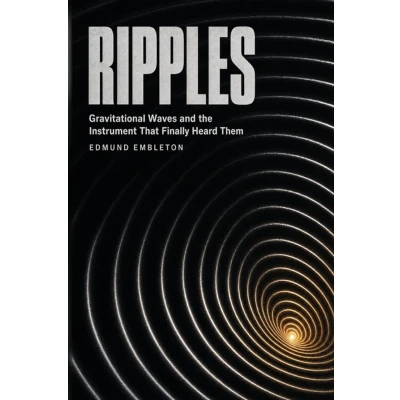
On 14 September 2015, two detectors four thousand kilometers apart moved by less than the width of a proton, seven milliseconds apart, in exactly the pattern predicted for two black holes swallowing each other a billion years ago. The signal lasted two tenths of a second. It had taken a hundred years to be ready for it. Einstein predicted these waves in 1916, then spent the next two decades arguing himself out of them, then back in. For most of the century the smart money said they could never be detected. The strain they produce in the Earth is so absurdly small that the first serious attempt at a detector was dismissed as an embarrassment, and its builder's claims never survived. Thirty-four chapters. No equations to work through. The whole story, from a sticky bead in a thought experiment to a machine that hears the universe. - Why gravity had to be rebuilt as geometry before waves made sense - The argument that finally settled whether the waves were real - Why a passing wave is felt as strain, and why nothing radiates below the quadrupole - The aluminum bars, the failed claims, and what they taught the field - A pulsar at Arecibo whose orbit shrank exactly as predicted - Why indirect proof was never going to be enough - Splitting a beam to measure a fraction of a proton - Four kilometers of the emptiest tube on Earth, and mirrors hung away from a shaking planet - Squeezing light to beat the quantum limit - Teaching the machine to tell signal from glitch, and why the first alert arrived during a practice run - Reading two black holes out of a chirp - Eighty days of secrecy after two neutron stars collided - The forge where gold is made - A new way to measure the size of the universe, and why it disagrees with the old one - Three spacecraft falling freely around the Sun - Millisecond clocks scattered across the galaxy, and the hum beneath everything - What the gravitational-wave sky looks like, and the signals nobody has caught yet Including the instrument itself, explained properly. Not as a miracle but as engineering: what each part does, what limits it, and what the next tenfold improvement will require. This is the story of humanity growing a new sense in a single lifetime, written for people who want to understand how it actually works. Scroll up and start reading.
 Prijshistorie
* Prijshistorie bevat geen data van Amazon, Amazon Marketplace.
Prijzen voor het laatst bijgewerkt op:
 Gerelateerde resultaten
 Productspecificaties


