


€ 62,99 Gratis verzending

Uitgelicht
|
|
62,99 |
Naar shop
|
| VERGELIJK ALLE AANBIEDERS (1) | ||
 Beschrijving
Vergelijk aanbieders (1)
€ 62,99 Gratis verzending
Winkels met andere maten
Beschrijving
(1)
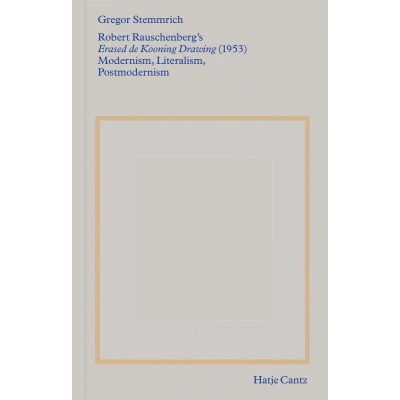
Seeing the Unseen Erased de Kooning Drawing is an artwork that radically challenged the very definition of art and questioned the notion of the artist as creator. Three American artists were involved in its creation: In 1953, Robert Rauschenberg erased a drawing by Willem de Kooning, who had somewhat reluctantly been giving his consent. Jasper Johns created a label for its first public presentation that proved to be key to the psychological framing of the piece. Having been transmuted into something new, the obliterated drawing was soon perceived as a pivotal moment in art history: In the 1950s it was considered Neo-Dada, in the 1960s it was hailed as the beginning of conceptual art, and in the 1980s saw it as a departure into postmodernism. Numerous artists referenced the work and it became a touchstone in Rauschenberg’s oeuvre. Gregor Stemmrich outlines its status as a litmus test for the definitions of modernism, literalism and postmodernism, and demonstrates its continuing relevance for the theory of the image and the question of appropriation.
 Productspecificaties
| EAN |
|
|---|---|
| Maat |
|
 Prijshistorie
Prijzen voor het laatst bijgewerkt op:
 Gerelateerde resultaten


