


€ 187,99 Gratis verzending

Uitgelicht
|
|
187,99 |
Naar shop
|

|
193,99 |
Naar shop
|

|
193,99 |
Naar shop
|
| VERGELIJK ALLE AANBIEDERS (3) | ||
 Beschrijving
Vergelijk aanbieders (3)
€ 187,99 Gratis verzending
€ 193,99 Gratis verzending
€ 193,99 Gratis verzending
Winkels met andere maten
Beschrijving
(1)
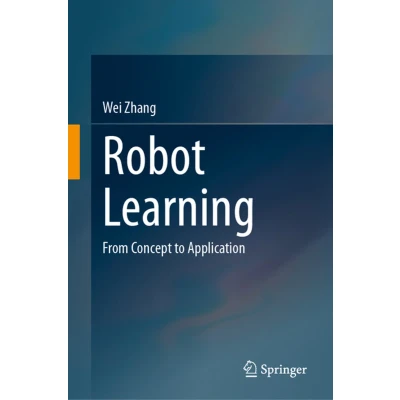
For decades, traditional robotics relied heavily on meticulously hand-engineered control systems. Robots were programmed to perform specific tasks in highly structured environments. However, the past decade has witnessed a paradigm shift fuelled by advancements in artificial intelligence, particularly in areas like deep learning and reinforcement learning. We have moved from programming robots to learning robots. This book is the definitive guide for researchers, engineers, and graduate students who want to design robots that see, think, and act with unprecedented autonomy. The book opens with a rigorous yet accessible foundation in robot kinematics, dynamics, and learning paradigms. It journeys through four major robotic platforms: Wheeled Robots – robust traversability representation, multi‑sensor perception, end-to-end decision-making, and real-world autonomous navigation. Legged Robots – bio‑inspired learning, trajectory generator-based hierarchical learning, multi-task learning, and learning whole-body motion control. Robot Arms – learning grasping, learning grasp‑stacking, learning replenishment, learning welding, and learning language‑guided manipulation skills. Aerial Robots – aerial perception, UAV target tracking, and drone patrolling. Each chapter blends theory with detailed case studies. Whether you are an academic researcher building the next generation of robots, a developer deploying autonomous robots, or an engineer turning a prototype into a product, this book offers the theory, algorithms, and practical case studies you need to bring robot learning to bear on real robotic systems.
 Prijshistorie
 * Prijshistorie bevat geen data van Amazon, Amazon Marketplace.
Prijzen voor het laatst bijgewerkt op:
 Gerelateerde resultaten
 Productspecificaties


