

€ 60,62 Gratis verzending

Uitgelicht
|
|
60,62 |
Naar shop
|

|
60,62 |
Naar shop
|

|
196,00 |
Naar shop
|
| VERGELIJK ALLE AANBIEDERS (3) | ||
 Beschrijving
Vergelijk aanbieders (3)
€ 60,62 Gratis verzending
€ 60,62 Gratis verzending
€ 196,00 Gratis verzending
Winkels met andere maten
Beschrijving
(1)
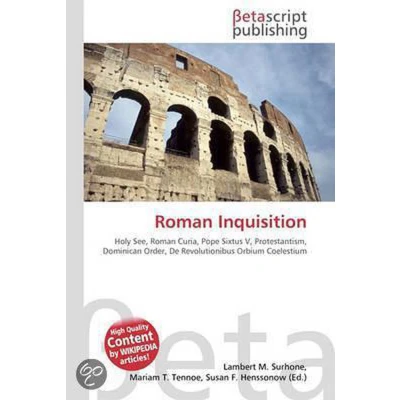
Please note that the content of this book primarily consists of articles available from Wikipedia or other free sources online. The Roman Inquisition was a system of tribunals developed by the Holy See during the second half of the 16th century, responsible for prosecuting individuals accused of a wide array of crimes related to heresy, including sorcery, immorality, blasphemy, Judaizing and witchcraft, as well for censorship of printed literature. The tribunals covered most of the Italian peninsula as well as Malta and also existed in isolated pockets of papal jurisdiction in other parts of Europe, including Avignon, in France. The Congregation of the Holy Office, one of the original 15 congregations of the Roman Curia created by Pope Sixtus V in 1588, presided over the activity of the local tribunals. While the Roman Inquisition was originally designed to combat the spread of Protestantism in Italy, the institution outlived its original purpose, and the system of tribunals lasted until the mid 18th century, when the Italian states began to suppress the local inquisitions, effectively eliminating the power of the church to prosecute heretical crimes.
 Prijshistorie
 * Prijshistorie bevat geen data van Amazon, Amazon Marketplace.
Prijzen voor het laatst bijgewerkt op:
 Gerelateerde resultaten
 Productspecificaties


