
Romanization In The Time Of Augustus
Uitgelicht

|
24,50 |
Naar shop
|
| VERGELIJK ALLE AANBIEDERS (1) | ||
 Beschrijving
Bol Partner
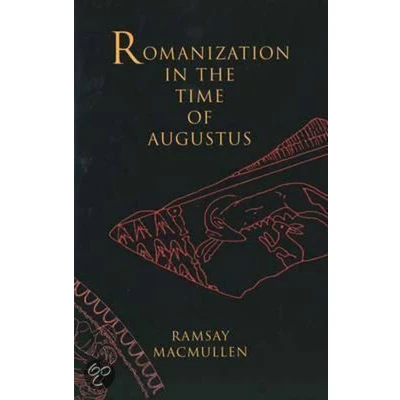
During the lifetime of Augustus (from 63 B.C. to A.D. 14), Roman civilization spread at a remarkable rate throughout the ancient world, influencing such areas as art and architecture, religion, law, local speech, city design, clothing, and leisure and family activities. In this vivid book, Ramsay MacMullen investigates why the adoption of Roman ways was so prevalent during this period. Drawing largely on archaeological sources, MacMullen discovers that during this period more than half a million Roman veterans were resettled in colonies overseas, and an additional hundred or more urban centers in the provinces took on normal Italian-Roman town constitutions. Great sums of expendable wealth came into the hands of ambitious Roman and local notables, some of which was spent in establishing and advertising Roman ways. MacMullen argues that acculturation of the ancient world was due not to cultural imperialism on the part of the conquerors but to eagerness of imitation among the conquered, and that the Romans were able to respond with surprisingly effective techniques of mass production and standardization.


Vergelijk aanbieders (1)

 Beschrijving
(1)
Beschrijving
(1)
During the lifetime of Augustus (from 63 B.C. to A.D. 14), Roman civilization spread at a remarkable rate throughout the ancient world, influencing such areas as art and architecture, religion, law, local speech, city design, clothing, and leisure and family activities. In this vivid book, Ramsay MacMullen investigates why the adoption of Roman ways was so prevalent during this period. Drawing largely on archaeological sources, MacMullen discovers that during this period more than half a million Roman veterans were resettled in colonies overseas, and an additional hundred or more urban centers in the provinces took on normal Italian-Roman town constitutions. Great sums of expendable wealth came into the hands of ambitious Roman and local notables, some of which was spent in establishing and advertising Roman ways. MacMullen argues that acculturation of the ancient world was due not to cultural imperialism on the part of the conquerors but to eagerness of imitation among the conquered, and that the Romans were able to respond with surprisingly effective techniques of mass production and standardization.
 Productspecificaties
| EAN |
|
|---|---|
| Maat |
|
 Prijshistorie
Prijzen voor het laatst bijgewerkt op:
 Gerelateerde resultaten


