


€ 31,02 Gratis verzending

Uitgelicht
|
|
31,02 |
Naar shop
|
| VERGELIJK ALLE AANBIEDERS (1) | ||
 Beschrijving
Vergelijk aanbieders (1)
€ 31,02 Gratis verzending
Winkels met andere maten
Beschrijving
(1)
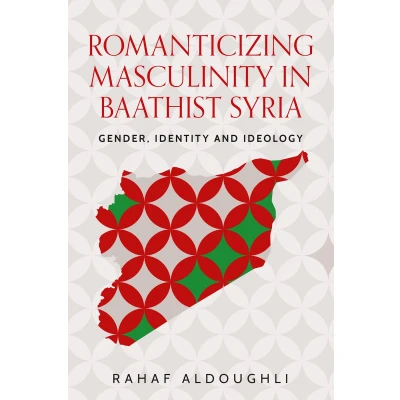
This book documents the influence of European Romantic nationalism in shaping the vision and practices of the Baathist regime in Syria, with particular attention to the impact of new concepts of gender in public life, the role of these constructs in perpetuating conflict and inequality, and current civic challenges to the Romantic Baathist ideal. Romantic nationalism has profoundly shaped the contours of Syrian identity under Baathist rule, creating deeply rooted habits of thought that continue to impact the lives of Syrians today. Far from being an indigenous construct, this specific ideal of national identity has roots in eighteenth- and nineteenth-century French and German social philosophy, which was closely studied and championed by the Baathist ‘founding fathers’. This vision of the national community included a novel view of gender roles in public life, emphasizing the muscularity of patriarchal protectors and the adoration of supporting women. Romanticizing masculinity in Baathist Syria is the first book to address these European borrowings in Baathism and to document how the associated gender ideologies filtered down to impact the everyday lives of Syrian women and men. Tracing the concepts of Romantic, muscular nationalism from the writings of the Baathist founders, to political and legislative implementations, and ultimately to impacts on everyday popular culture, the book demonstrates how a new regime of Romantic gendered identity became central in Baathist efforts to unify the country’s heterogenous religious and ethnic communities. Continuing up to the current day, the book addresses how this gendered nationalism has contributed to violent conflict in Syria and how it is being challenged by new concepts of civic pluralism. This book provides a novel analysis of the conceptual sources and ideological contours of the Assad regime. The book documents the Baathists’ fascination with Romanticized and 'muscular' ideas of the nation that emerged in eighteenth- and nineteenth-century European social philosophy, and traces the implementation and impacts of these ideologies in the Syrian context. Emphasising the emergence of new forms of public gendered identity in Syria as a unifying feature of nationalism bound closely with the stability of the regime, the book shows how Romantic, muscular nationalism first rose to hegemony and then was shattered by its inherent violence, contradictions and inequalities. The final chapter closes by considering how a new vision of pluralism and civic belonging is today challenging the Romanticized Baathist ideal in contention for Syria’s future.
 Productspecificaties
| EAN |
|
|---|---|
| Maat |
|
 Prijshistorie
 Prijzen voor het laatst bijgewerkt op:
 Gerelateerde resultaten


