


€ 54,99 Gratis verzending

Uitgelicht
|
|
54,99 |
Naar shop
|

|
63,38 |
Naar shop
|
| VERGELIJK ALLE AANBIEDERS (2) | ||
 Beschrijving
Vergelijk aanbieders (2)
€ 54,99 Gratis verzending
€ 63,38 Gratis verzending
Winkels met andere maten
Beschrijving
(1)
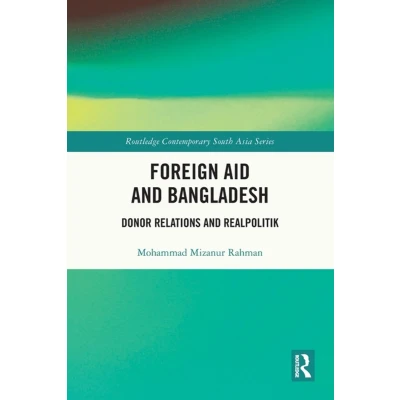
This book offers a rich combination of aid history and a nuanced perspective of aid partnerships at the country level. It will be of interest to professionals and academics of aid and development studies, policy studies, development aid and political science as well as South Asian Studies. Foreign Aid and Bangladesh offers a rich combination of aid history – from the evolution of aid as a global agenda after WWII to the rise of different multilateral, bilateral, and emerging donors and their policy shifts – and a nuanced perspective of aid partnerships at the country level. Drawing on first-hand experiences and insights, the author deeply investigates the realities of a longstanding aid recipient, Bangladesh, and argues that without a political economy approach, one cannot understand the realpolitik of development aid. As an emerging economy from the Global South, Bangladesh has been a longstanding partner and recipient of international aid since 1971. Bangladesh has also been active in the global discussions leading to redefining the new narrative and arguments for the new aid regime since the beginning of this century. Building on the analysis of Bangladesh's aid relations, the book shows that there has not been any qualitative shift in aid behavior in the new aid regime that set new norms after the end of the Cold War to ensure recipients' ownership and welcomed an expanding aid landscape by integrating emerging economies from the Global South for achieving better development results. The book analyzes the role of different actors in the development partnership, both traditional and emerging donors - such as China and India, and their partnership practices. It examines different forms of aid and their changing perspective, particularly technical assistance. Based on more than two decades of research and profound insider observations, the book debunks the myth that Southern providers could be more benign to their partners. The arguments placed in the book expose that there is no difference between traditional and emerging donors in ensuring donors' business and strategic interests. While donors continue to ensure their interests in providing aid, the Realpolitik of the situation in the recipient country shows that there is a specific economic and political agenda in pursuing aid. Presenting a comprehensive picture of Bangladesh's aid partnership, through the lens of new development partnership principles and narratives of development aid, this book will be of interest to scholars and researchers of aid and development studies and political science as well as South Asian Studies. Donor officials, civil servants, and national and international policy communities will also benefit from this book.
 Prijshistorie
 * Prijshistorie bevat geen data van Amazon.
Prijzen voor het laatst bijgewerkt op:
 Gerelateerde resultaten
 Productspecificaties


