
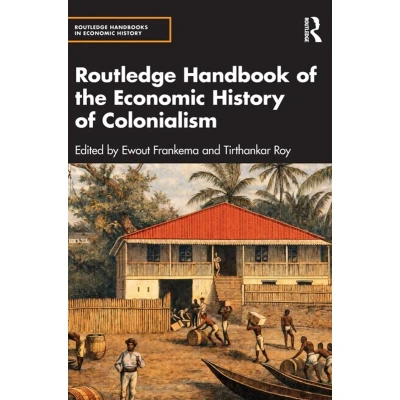
Routledge Handbook of the Economic History Colonialism
Uitgelicht

|
285,00 |
Naar shop
|

|
324,60 |
Naar shop
|

|
324,60 |
Naar shop
|
| VERGELIJK ALLE AANBIEDERS (3) | ||
 Beschrijving
Bol
This handbook gathers a set of specially-commissioned essays written by leading contributors to the field which focus on the two principal waves of European colonialism since the 15th century. European colonial rule in Asia, Africa, and the Americas was a world-changing force and left a variety of legacies – demographic, economic, environmental, technological, and cultural. The economic history of colonialism has seen an outburst of research in the last 20-odd years; but, with many significant new works appearing in specialist journals, students and teachers of the field may still find it challenging to explain what this scholarship adds up to, its most significant claims and breakthroughs and how it relates to older versions of the economic history of colonialism. This handbook gathers a set of specially commissioned essays written by leading contributors to the field which focus on the two principal waves of European colonialism since the 15th century: the first in which Europeans converged mainly on the Americas (c. 1490s–1820s) and the second in which attention was focused on acquiring control over large swathes of Asia and Africa (c. 1850s–1970s). It shows students of economic history the key facts that need to be explained about the imperial powers, the colonial experience, and why the European empires outside Europe are significant for the economic history of the world. The handbook also includes studies of the Japanese and American Empires in Asia, as these were provoked by and in nature quite comparable to the formation of European empires thus providing worthwhile and meaningful comparisons. This handbook will serve as a vital resource for research, teaching, and reference, offering readers insights into economic history, colonialism, globalisation, and the forces that have shaped the modern world economy.


 Beschrijving
(1)
Beschrijving
(1)
This handbook gathers a set of specially-commissioned essays written by leading contributors to the field which focus on the two principal waves of European colonialism since the 15th century. European colonial rule in Asia, Africa, and the Americas was a world-changing force and left a variety of legacies – demographic, economic, environmental, technological, and cultural. The economic history of colonialism has seen an outburst of research in the last 20-odd years; but, with many significant new works appearing in specialist journals, students and teachers of the field may still find it challenging to explain what this scholarship adds up to, its most significant claims and breakthroughs and how it relates to older versions of the economic history of colonialism. This handbook gathers a set of specially commissioned essays written by leading contributors to the field which focus on the two principal waves of European colonialism since the 15th century: the first in which Europeans converged mainly on the Americas (c. 1490s–1820s) and the second in which attention was focused on acquiring control over large swathes of Asia and Africa (c. 1850s–1970s). It shows students of economic history the key facts that need to be explained about the imperial powers, the colonial experience, and why the European empires outside Europe are significant for the economic history of the world. The handbook also includes studies of the Japanese and American Empires in Asia, as these were provoked by and in nature quite comparable to the formation of European empires thus providing worthwhile and meaningful comparisons. This handbook will serve as a vital resource for research, teaching, and reference, offering readers insights into economic history, colonialism, globalisation, and the forces that have shaped the modern world economy.
 Productspecificaties
 Prijshistorie
* Prijshistorie bevat geen data van Amazon, Amazon Marketplace.
Prijzen voor het laatst bijgewerkt op:
 Gerelateerde resultaten


