


€ 53,93 Gratis verzending

Uitgelicht
|
|
53,93 |
Naar shop
|

|
55,11 |
Naar shop
|

|
55,11 |
Naar shop
|
| VERGELIJK ALLE AANBIEDERS (3) | ||
 Beschrijving
Vergelijk aanbieders (3)
€ 53,93 Gratis verzending
€ 55,11 Gratis verzending
€ 55,11 Gratis verzending
Winkels met andere maten
Beschrijving
(1)
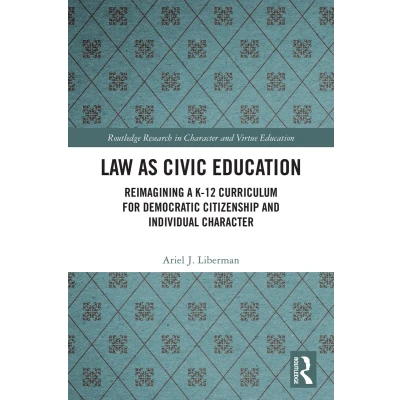
This book argues that—far from abandoning the oft-emphasized, but little realized promise of civic education as a means of cultivating critical thinking skills and democratic character—we should embrace it, proposing a reimagined civic education founded in teaching students in primary and secondary school law and legal reasoning. If a civic education is the essential foundation for a functioning, discursive democracy, how should it be taught? This book offers an innovative solution, arguing that far from abandoning the often- grand promise of civic education as a means of cultivating reasoning skills and democratic character, we should embrace it, and proposes a reimagined civic education based on teaching students in primary and secondary school law and legal reasoning. Drawing on a range of theoretical disciplines— law, philosophy, ethics, sociology, psychology, and moral educational and child development theory— this monograph justifies the benefits of law learning as a form of character and civic education and offers historical and comparative educational examples to show what is possible. It demonstrates how legal teaching can be incorporated into a K- 12 curriculum and argues that such training can be transformative, guiding students to become citizens capable of meeting the demands of democracy: citizens with stronger reasoning skills, a motivation to self- examine their values and beliefs and bring them into conversation with social values, and an ability to effectively navigate political institutions and participate in public discourse. This compelling and deeply original work will be of interest to scholars and educators in the fields of civic education, character and virtue education, legal studies, and philosophy of education.
 Prijshistorie
 * Prijshistorie bevat geen data van Amazon, Amazon Marketplace.
Prijzen voor het laatst bijgewerkt op:
 Gerelateerde resultaten
 Productspecificaties


