








Routledge Studies in Development, Displacement and Resettlement with People First
Uitgelicht

|
57,99 |
Naar shop
|
 Beschrijving
Bol
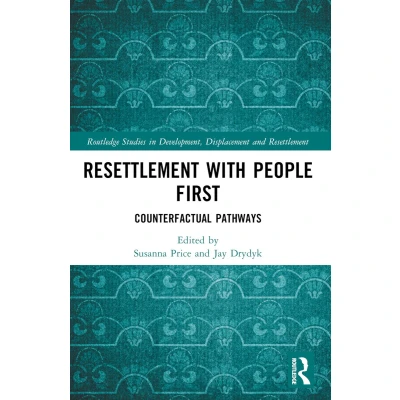
This book puts forward powerful counterfactual case studies to assess what problems real-world development projects would likely have avoided if the project had followed a higher standard, such as the World Commission on Dams policy framework. For academic researchers, development practitioners, and policy makers. Should people in the way lose out as new reservoirs, mines, plantations, or superhighways displace them from their homes and livelihoods? What if the process of resettlement were made accountable to those impacted, empowering them to achieve just outcomes and to share in the benefits of development projects? This book seeks to answer these questions, putting forward powerful counterfactual case studies to assess what problems real-world development projects would likely have avoided if the project had included the affected people in decision making about whether and how they should resettle. Drawing on contributions from leading and emerging scholars from around the world, this book considers cases involving dams, mines, roads, and housing, amongst others, from Asia, Africa, and South America. In each case, the counterfactual approach invites us to reconsider how the dynamics of accountability play out through resettlement hazards and the asymmetries of power relations in the negotiation of displacement benefits and redress. Considering a range of theoretical and ethical perspectives, the book concludes with practical, alternative policy suggestions for displacement arising both from development and from slow onset climate change. This book’s novel approach focussing on the people's agency in the dynamics of governance, accountability, and (dis)empowerment in development projects with displacement and resettlement will appeal to academic researchers, development practitioners, and policymakers.


Vergelijk aanbieders (1)

 Beschrijving
(1)
Beschrijving
(1)
This book puts forward powerful counterfactual case studies to assess what problems real-world development projects would likely have avoided if the project had followed a higher standard, such as the World Commission on Dams policy framework. For academic researchers, development practitioners, and policy makers. Should people in the way lose out as new reservoirs, mines, plantations, or superhighways displace them from their homes and livelihoods? What if the process of resettlement were made accountable to those impacted, empowering them to achieve just outcomes and to share in the benefits of development projects? This book seeks to answer these questions, putting forward powerful counterfactual case studies to assess what problems real-world development projects would likely have avoided if the project had included the affected people in decision making about whether and how they should resettle. Drawing on contributions from leading and emerging scholars from around the world, this book considers cases involving dams, mines, roads, and housing, amongst others, from Asia, Africa, and South America. In each case, the counterfactual approach invites us to reconsider how the dynamics of accountability play out through resettlement hazards and the asymmetries of power relations in the negotiation of displacement benefits and redress. Considering a range of theoretical and ethical perspectives, the book concludes with practical, alternative policy suggestions for displacement arising both from development and from slow onset climate change. This book’s novel approach focussing on the people's agency in the dynamics of governance, accountability, and (dis)empowerment in development projects with displacement and resettlement will appeal to academic researchers, development practitioners, and policymakers.
 Productspecificaties
| EAN |
|
|---|---|
| Maat |
|
 Prijshistorie
Prijzen voor het laatst bijgewerkt op:
 Gerelateerde resultaten


