








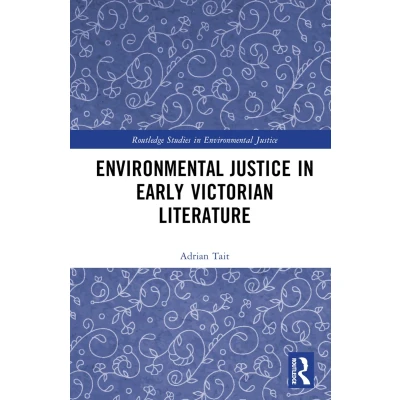
Routledge Studies in Environmental Justice Early Victorian Literature
Uitgelicht

|
167,20 |
Naar shop
|
 Beschrijving
Bol
This book combines environmental justice scholarship with a material ecocriticism to explore how early Victorian literature responded to the growing problem of environmental injustice. An indispensable resource for scholars and students working in the fields of Victorian literature, environmental justice, and ecocriticism. This innovative new book combines environmental justice scholarship with a material ecocriticism to explore the way in which early Victorian literature (1837–1860) responded to the growing problem of environmental injustice. As this book emphasises, environmental injustice – simply, the convergence of poverty and pollution – was not an isolated phenomenon, but a structural form of inequality; a product of industrial modernity’s radical reformation of British society, it particularly affected the working classes. As each chapter reveals in detail, this form of environmental inequality (or ‘classism’) drew sharply critical reactions from figures as diverse as Thomas Carlyle, Friedrich Engels, Charles Dickens, and John Ruskin, and from within the Chartist movement, as working-class writers themselves reacted to the hazardous realities of a divided society. But as this book also reveals, these writers recognised that a truly just society respects the needs of the nonhuman and takes account of the material world in all its own aliveness; even if only tentatively, they reached for a more inclusive, emergent form of justice that might address the social and ecological impacts of industrial modernity, an idea which is no less relevant today. This book represents an indispensable resource for scholars and students working in the fields of Victorian literature, environmental justice, and ecocriticism.


Vergelijk aanbieders (1)

 Beschrijving
(1)
Beschrijving
(1)
This book combines environmental justice scholarship with a material ecocriticism to explore how early Victorian literature responded to the growing problem of environmental injustice. An indispensable resource for scholars and students working in the fields of Victorian literature, environmental justice, and ecocriticism. This innovative new book combines environmental justice scholarship with a material ecocriticism to explore the way in which early Victorian literature (1837–1860) responded to the growing problem of environmental injustice. As this book emphasises, environmental injustice – simply, the convergence of poverty and pollution – was not an isolated phenomenon, but a structural form of inequality; a product of industrial modernity’s radical reformation of British society, it particularly affected the working classes. As each chapter reveals in detail, this form of environmental inequality (or ‘classism’) drew sharply critical reactions from figures as diverse as Thomas Carlyle, Friedrich Engels, Charles Dickens, and John Ruskin, and from within the Chartist movement, as working-class writers themselves reacted to the hazardous realities of a divided society. But as this book also reveals, these writers recognised that a truly just society respects the needs of the nonhuman and takes account of the material world in all its own aliveness; even if only tentatively, they reached for a more inclusive, emergent form of justice that might address the social and ecological impacts of industrial modernity, an idea which is no less relevant today. This book represents an indispensable resource for scholars and students working in the fields of Victorian literature, environmental justice, and ecocriticism.
 Productspecificaties
| EAN |
|
|---|---|
| Maat |
|
 Prijshistorie
Prijzen voor het laatst bijgewerkt op:
 Gerelateerde resultaten


