
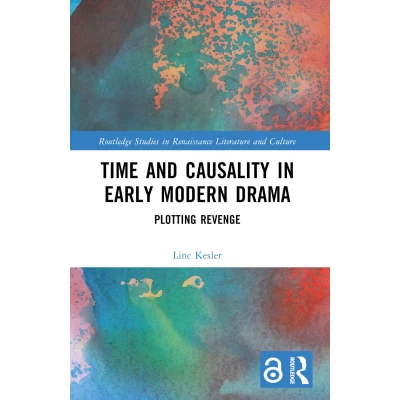
Routledge Studies in Renaissance Literature and Culture Time Causality Early Modern Drama
Uitgelicht

|
58,99 |
Naar shop
|
| VERGELIJK ALLE AANBIEDERS (1) | ||
 Beschrijving
Bol
The opening of the first theatre in 1579 created an interplay between the innovations of producers and the perceptions of orally-conditioned audiences. Located in the context of relations between the academy and Indigenous communities, this work questions our abilities, habituated to literacy, to understand oral systems. The opening of the first commercial theatre in London in 1579 initiated a pattern of development that radically reshaped representation. The competition among theatres required the constant production of new works, creating an interplay between the innovations of producers and the rapidly changing perceptions of audiences. The result was a process of incremental change that redefined perceptions of time, action, and identity. Aristotle in the Poetics contrasted a similar set of formal developments to the earlier system of the epics, which, like many predecessors of early modern drama, had emerged from largely oral traditions. Located in the context of contemporary relations between the academy and Indigenous communities, Time and Causality in Early Modern Drama: Plotting Revenge traces these developments through changes in the revenge tragedy form and questions our abilities, habituated to literacy, to fully understand or appreciate the complexity and operations of oral systems. The Open Access version of this book, available at , has been made available under a Creative Commons [Attribution-Non Commercial-No Derivatives (CC-BY-NC-ND)] 4.0 license.


Vergelijk aanbieders (1)

 Beschrijving
(1)
Beschrijving
(1)
The opening of the first theatre in 1579 created an interplay between the innovations of producers and the perceptions of orally-conditioned audiences. Located in the context of relations between the academy and Indigenous communities, this work questions our abilities, habituated to literacy, to understand oral systems. The opening of the first commercial theatre in London in 1579 initiated a pattern of development that radically reshaped representation. The competition among theatres required the constant production of new works, creating an interplay between the innovations of producers and the rapidly changing perceptions of audiences. The result was a process of incremental change that redefined perceptions of time, action, and identity. Aristotle in the Poetics contrasted a similar set of formal developments to the earlier system of the epics, which, like many predecessors of early modern drama, had emerged from largely oral traditions. Located in the context of contemporary relations between the academy and Indigenous communities, Time and Causality in Early Modern Drama: Plotting Revenge traces these developments through changes in the revenge tragedy form and questions our abilities, habituated to literacy, to fully understand or appreciate the complexity and operations of oral systems. The Open Access version of this book, available at , has been made available under a Creative Commons [Attribution-Non Commercial-No Derivatives (CC-BY-NC-ND)] 4.0 license.
 Productspecificaties
| EAN |
|
|---|---|
| Maat |
|
 Prijshistorie
Prijzen voor het laatst bijgewerkt op:
 Gerelateerde resultaten


