
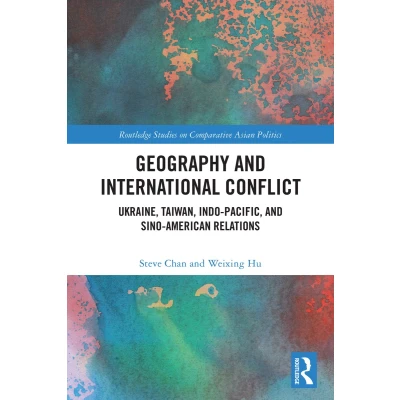
Routledge Studies on Comparative Asian Politics Geography and International Conflict
Uitgelicht

|
53,99 |
Naar shop
|

|
60,01 |
Naar shop
|
| VERGELIJK ALLE AANBIEDERS (2) | ||
 Beschrijving
Bol
This book analyses the influence of geography—defined broadly to refer to physical size, location, terrain, accessibility, insularity, climate, regions, neighborhoods, natural endowment, strategic pathways, maritime and continental orientations, and even imagined communities—on international relations. This book analyzes the influence of geography— defined broadly to refer to physical size, location, terrain, accessibility, insularity, climate, regions, neighborhoods, natural endowment, strategic pathways, maritime and continental orientations and even imagined communities— on international relations. Drawing on evidence and insights from cross- national research the book highlights geography’s enduring importance in and relevance to the ongoing Russo-Ukrainian War, tension across the Taiwan Strait, construction of regional order such as Greater Eurasia and Indo-Pacific and important differences in the nature of the security environment facing China and the U.S., respectively. It successfully bridges the gap that often separates international relations scholarship, interested in the central tendencies characterizing how states interact in general, and more idiographic approaches of Sinology providing rich country-specific details but at the expense of often overlooking features that China shares with other countries. Offering an overview of propositions about how geography has shaped human development and institutions, alongside in- depth discussions of its role in influencing national security and interstate conflict, this book will appeal to students and scholars of international relations, political geography and comparative politics.


 Beschrijving
(2)
Beschrijving
(2)
This book analyses the influence of geography—defined broadly to refer to physical size, location, terrain, accessibility, insularity, climate, regions, neighborhoods, natural endowment, strategic pathways, maritime and continental orientations, and even imagined communities—on international relations. This book analyzes the influence of geography— defined broadly to refer to physical size, location, terrain, accessibility, insularity, climate, regions, neighborhoods, natural endowment, strategic pathways, maritime and continental orientations and even imagined communities— on international relations. Drawing on evidence and insights from cross- national research the book highlights geography’s enduring importance in and relevance to the ongoing Russo-Ukrainian War, tension across the Taiwan Strait, construction of regional order such as Greater Eurasia and Indo-Pacific and important differences in the nature of the security environment facing China and the U.S., respectively. It successfully bridges the gap that often separates international relations scholarship, interested in the central tendencies characterizing how states interact in general, and more idiographic approaches of Sinology providing rich country-specific details but at the expense of often overlooking features that China shares with other countries. Offering an overview of propositions about how geography has shaped human development and institutions, alongside in- depth discussions of its role in influencing national security and interstate conflict, this book will appeal to students and scholars of international relations, political geography and comparative politics.
AmazonPagina's: 118, Editie: Eerste editie, Paperback, Routledge
 Productspecificaties
 Prijshistorie
* Prijshistorie bevat geen data van Amazon.
Prijzen voor het laatst bijgewerkt op:
 Gerelateerde resultaten


