
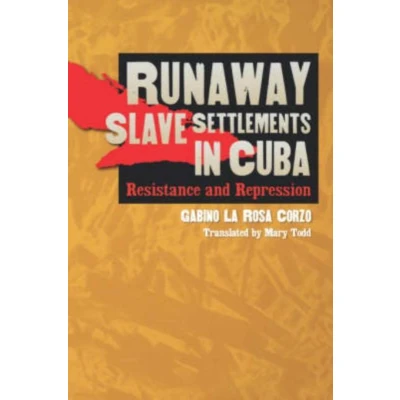
Runaway Slave Settlements in Cuba
Uitgelicht

|
46,99 |
Naar shop
|
| VERGELIJK ALLE AANBIEDERS (1) | ||
 Beschrijving
Bol
Combining archaeological and historical methods, this is an account of the runaway slaves settlements (""palenques"") that formed in the inaccessible mountain chains of eastern Cuba from 1737 to 1850. The author demonstrates how romanticized the communities have become in historical memory. Combining archaeological and historical methods, Gabino La Rosa Corzo provides the most detailed and accurate available account of the runaway slave settlements ( palenques ) that formed in the inaccessible mountain chains of eastern Cuba from 1737 to 1850, decades before the end of slavery on the island. The traces that remain of these communities provide important clues to historical processes such as slave resistance and emancipation, anticolonial insurgency, and the emergence of a free peasantry. Some of the communities developed into thriving towns that still exist today. La Rosa challenges the claims of previous scholars and demonstrates how romanticized the communities have become in historical memory. In part by using detailed maps drawn on site, La Rosa shows that palenques were smaller and fewer in number than previously thought and they contained mostly local, rather than long-distance, fugitives. In addition, the residents were less aggressive and violent than myth holds, often preferring to flee rather than fight a system of oppression that was even more effective and organized than generally supposed. La Rosa's study illuminates many social and economic issues related to the African diaspora in the Caribbean, with particular focus on slavery, resistance, and independence. This translation makes the book available in English for the first time. La Rosa Corzo corrects earlier accounts of runaway slave communities in the remote mountains of eastern Cuba that romanticized and exaggerated the influence of the runaways. The author, a Cuban anthropologist, depicts localized communities that were non-aggressive, creolized, and less oppressed than was generally supposed. La Rosa Corzo updates and revises our knowledge of the palenques in the Spanish Caribbean.


Vergelijk aanbieders (1)

 Beschrijving
(1)
Beschrijving
(1)
Combining archaeological and historical methods, this is an account of the runaway slaves settlements (""palenques"") that formed in the inaccessible mountain chains of eastern Cuba from 1737 to 1850. The author demonstrates how romanticized the communities have become in historical memory. Combining archaeological and historical methods, Gabino La Rosa Corzo provides the most detailed and accurate available account of the runaway slave settlements ( palenques ) that formed in the inaccessible mountain chains of eastern Cuba from 1737 to 1850, decades before the end of slavery on the island. The traces that remain of these communities provide important clues to historical processes such as slave resistance and emancipation, anticolonial insurgency, and the emergence of a free peasantry. Some of the communities developed into thriving towns that still exist today. La Rosa challenges the claims of previous scholars and demonstrates how romanticized the communities have become in historical memory. In part by using detailed maps drawn on site, La Rosa shows that palenques were smaller and fewer in number than previously thought and they contained mostly local, rather than long-distance, fugitives. In addition, the residents were less aggressive and violent than myth holds, often preferring to flee rather than fight a system of oppression that was even more effective and organized than generally supposed. La Rosa's study illuminates many social and economic issues related to the African diaspora in the Caribbean, with particular focus on slavery, resistance, and independence. This translation makes the book available in English for the first time. La Rosa Corzo corrects earlier accounts of runaway slave communities in the remote mountains of eastern Cuba that romanticized and exaggerated the influence of the runaways. The author, a Cuban anthropologist, depicts localized communities that were non-aggressive, creolized, and less oppressed than was generally supposed. La Rosa Corzo updates and revises our knowledge of the palenques in the Spanish Caribbean.
 Productspecificaties
| EAN |
|
|---|---|
| Maat |
|
 Prijshistorie
Prijzen voor het laatst bijgewerkt op:
 Gerelateerde resultaten


