


€ 46,40 Gratis verzending

Uitgelicht
|
|
46,40 |
Naar shop
|

|
75,96 |
Naar shop
|
| VERGELIJK ALLE AANBIEDERS (2) | ||
 Beschrijving
Vergelijk aanbieders (2)
€ 46,40 Gratis verzending
€ 75,96 € 3,00 verzendkosten Totaal € 78,96
Winkels met andere maten
Beschrijving
(1)
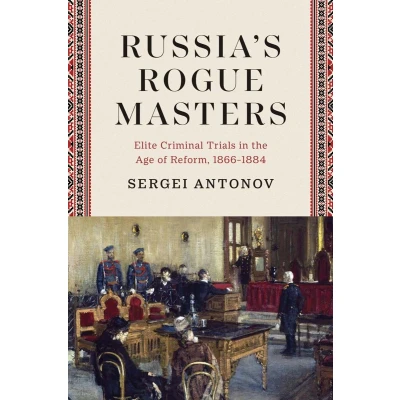
Late imperial Russia’s criminal justice system examined through its most prominent public cases In this book, lawyer and historian Sergei Antonov examines the largest and most prominent criminal cases following the landmark judicial reform of 1864 that introduced the public jury trial. Each case involved elite defendants or victims: nobles, officials, and wealthy merchants. Their crimes ranged from murder and arson to fraud, forgery, and embezzlement. Antonov argues that, far from a reluctant concession of little consequence within Russia’s autocratic regime, the new courts were a crucial instrument through which the tsar and his government maintained a fragile political and social equilibrium. The new courts punished wayward elites and admonished the rest, teaching them about the limits of permissible violence, the exercise of power, and profit seeking. For the only time in Russia’s history, powerful persons could reliably expect to go on trial for major crimes, while also expecting that trial to be fundamentally fair. Moreover, for the only time in Russian history, late imperial criminal trials exposed the hidden lives of Russia’s elites to public scrutiny and discussion. But the effects of this panoptic gaze were complex and ambiguous, and the narratives produced during the trials were unintentionally ambivalent—not only about those being prosecuted, but also about the new governing regime itself.
 Prijshistorie
 * Prijshistorie bevat geen data van Amazon.
Prijzen voor het laatst bijgewerkt op:
 Gerelateerde resultaten
 Productspecificaties


