








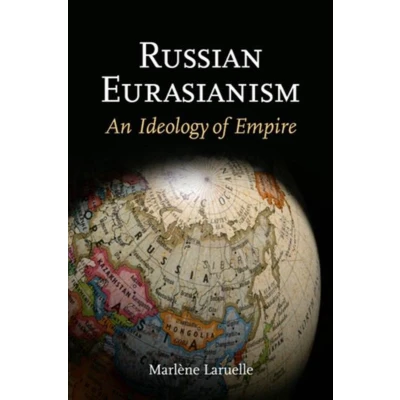
Russian Eurasianism: An Ideology of Empire
Uitgelicht

|
28,78 |
Naar shop
|

|
28,78 |
Naar shop
|

|
28,78 |
Naar shop
|
 Beschrijving
Bol
Using a wide range of sources, Marlene Laruelle discusses the impact of the ideology of Eurasianism on geopolitics, interior policy, foreign policy, and culturalist philosophy. Since the dissolution of the USSR, an ideology promoting Russian-Asian greatnesshas taken hold among an influential group of Russian scholars and intellectuals. Theideology, Eurasianism, purports to tell Russians what is unalterably important aboutthem and why it can only be expressed in an empire. In Russian Eurasianism: AnIdeology of Empire, Marlène Laruelle examines the presuppositions and impact of thismovement. “This book is a tour de force not merely because of the depth of the scholarship andthe skill of the argument but also because Laruelle unveils a subject crucial tounderstanding today’s Russia but never given proper due.”—Robert Legvold, Foreign Affairs “Russian Eurasianism is a lucid and rational guide, based on thorough scholarship andan admirable reluctance to sensationalize or to claim too much.”—Edmund Griffiths, Times Literary Supplement “Russian Eurasianism is a must-read for intellectual historians, policymakers, culturalscholars, Russia watchers, or, for that matter, anyone who uneasily senses thatsomething is moving in the deep currents beneath the surface of contemporaryRussia, but is not sure of what it is.”—Maria Carlson, The Russian Review “Laruelle’s scrutiny of neo-Eurasianism is sympathetic, balanced and perceptive—a signal achievement given the muddled, and sometimes messianic, nature of muchEurasianist writing.”—John Berryman, International Affairs “The author writes with an erudition and breadth of insight that is unique in theburgeoning field of what we might call ‘Eurasianism studies.’ The basic point toemerge from her study is the utterly extraordinary ideological malleability ofEurasianism.”—Mark Bassin, Slavic Review Since the dissolution of the Soviet Union, Russia has been marginalized at the edge of a Western-dominated political and economic system. In recent years, however, leading Russian figures, including former president Vladimir Putin, have begun to stress a geopolitics that puts Russia at the center of a number of axes: European-Asian, Christian-Muslim-Buddhist, Mediterranean-Indian, Slavic-Turkic, and so on. This volume examines the political presuppositions and expanding intellectual impact of Eurasianism, a movement promoting an ideology of Russian-Asian greatness, which has begun to take hold throughout Russia, Kazakhstan, and Turkey. Eurasianism purports to tell Russians what is unalterably important about them and why it can only be expressed in an empire. Using a wide range of sources, Marlene Laruelle discusses the impact of the ideology of Eurasianism on geopolitics, interior policy, foreign policy, and culturalist philosophy.


 Beschrijving
(2)
Beschrijving
(2)
Using a wide range of sources, Marlene Laruelle discusses the impact of the ideology of Eurasianism on geopolitics, interior policy, foreign policy, and culturalist philosophy. Since the dissolution of the USSR, an ideology promoting Russian-Asian greatnesshas taken hold among an influential group of Russian scholars and intellectuals. Theideology, Eurasianism, purports to tell Russians what is unalterably important aboutthem and why it can only be expressed in an empire. In Russian Eurasianism: AnIdeology of Empire, Marlène Laruelle examines the presuppositions and impact of thismovement. “This book is a tour de force not merely because of the depth of the scholarship andthe skill of the argument but also because Laruelle unveils a subject crucial tounderstanding today’s Russia but never given proper due.”—Robert Legvold, Foreign Affairs “Russian Eurasianism is a lucid and rational guide, based on thorough scholarship andan admirable reluctance to sensationalize or to claim too much.”—Edmund Griffiths, Times Literary Supplement “Russian Eurasianism is a must-read for intellectual historians, policymakers, culturalscholars, Russia watchers, or, for that matter, anyone who uneasily senses thatsomething is moving in the deep currents beneath the surface of contemporaryRussia, but is not sure of what it is.”—Maria Carlson, The Russian Review “Laruelle’s scrutiny of neo-Eurasianism is sympathetic, balanced and perceptive—a signal achievement given the muddled, and sometimes messianic, nature of muchEurasianist writing.”—John Berryman, International Affairs “The author writes with an erudition and breadth of insight that is unique in theburgeoning field of what we might call ‘Eurasianism studies.’ The basic point toemerge from her study is the utterly extraordinary ideological malleability ofEurasianism.”—Mark Bassin, Slavic Review Since the dissolution of the Soviet Union, Russia has been marginalized at the edge of a Western-dominated political and economic system. In recent years, however, leading Russian figures, including former president Vladimir Putin, have begun to stress a geopolitics that puts Russia at the center of a number of axes: European-Asian, Christian-Muslim-Buddhist, Mediterranean-Indian, Slavic-Turkic, and so on. This volume examines the political presuppositions and expanding intellectual impact of Eurasianism, a movement promoting an ideology of Russian-Asian greatness, which has begun to take hold throughout Russia, Kazakhstan, and Turkey. Eurasianism purports to tell Russians what is unalterably important about them and why it can only be expressed in an empire. Using a wide range of sources, Marlene Laruelle discusses the impact of the ideology of Eurasianism on geopolitics, interior policy, foreign policy, and culturalist philosophy.
AmazonPagina's: 298, Editie: Reprint, Paperback, J. Hopkins Uni. Press
 Productspecificaties
 Prijshistorie
* Prijshistorie bevat geen data van Amazon, Amazon Marketplace.
Prijzen voor het laatst bijgewerkt op:
 Gerelateerde resultaten


