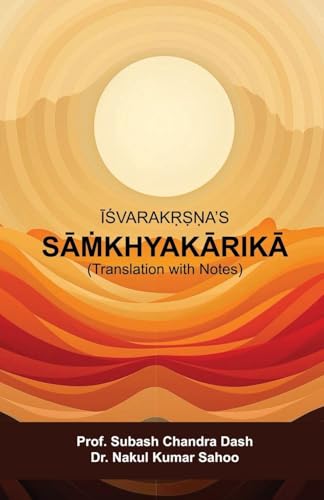
S¿¿KHYAK¿RIK¿
Uitgelicht
|
15,76 |
Naar shop
|
|
29,17 |
Naar shop
|
|
29,17 |
Naar shop
|
Beschrijving
Bol
The S¿¿khyak¿rik¿ of ¿¿varak¿¿¿a stands as one of the most influential and enduring texts in the long tradition of Indian philosophical thought. Composed around the 4th to 5th A.D., it systematizes and codifies the doctrines of the classical S¿¿khya School, presenting them in seventy ¿lokas yet profound aphorisms (k¿rik¿s). The text occupies a pivotal place in the intellectual history of India, bridging the speculative cosmologies of early S¿¿khya with the later analytical developments of Yoga and Ved¿nta. The K¿rik¿ begins with the most fundamental fact human life-the (dükhatraya). universality of suffering From this recognition arises the philosophical inquiry into its cessation, which the text regards as the ultimate human goal (ni¿¿reyasa). It argues that empirical and ritual remedies, though temporarily effective, fail to provide lasting relief because they lack ek¿nta (certainty) and atyanta (permanence). The inadequacy of worldly and Vedic means leads to the discovery of a higher path: discriminative knowledge, the insight that distinguishes between the eternal Purüa (pure consciousness) and the transient Prak¿ti (material nature). Liberation (mok¿a) is achieved when this distinction is fully realized, resulting in the absolute cessation of suffering and the attainment of spiritual freedom. The philosophical method of the S¿¿khyak¿rik¿ combines rigorous logical reasoning with psychological and metaphysical analysis. Its dualistic ontology, based on the twenty-five principles (tattvas), provides a comprehensive framework for explaining both the material and the conscious dimensions of existence. The text's precision and systematic structure established a model for subsequent Indian philosophical treatises and inspired a rich commentarial tradition, including Gaüap¿da's Bh¿¿ya, V¿caspati Mi¿ra's Tattvakaumud¿ Vijñ¿nabhik¿u's S¿¿khyapravacanabh¿¿ya. This present book seeks to present the S¿¿khyak¿rik¿ not merely as a historical artifact but as a living philosophical text that continues to address enduring questions about consciousness, causality and the human condition. By exploring its epistemological rigor, metaphysical depth, and soteriological vision, the work aims to demonstrate that the S¿¿khyak¿rik¿ remains a vital contribution to the universal quest for knowledge and liberation. Hope this will be helpful for students and researchers towards better understanding.
AmazonPagina's: 154, Paperback, BLACK EAGLE BOOKS
Prijzen voor het laatst bijgewerkt op:
