
Savonarola: The Prophet Who Tried to Purify Florence
Uitgelicht

|
14,82 |
Naar shop
|

|
15,72 |
Naar shop
|

|
15,72 |
Naar shop
|
| VERGELIJK ALLE AANBIEDERS (3) | ||
 Beschrijving
Bol
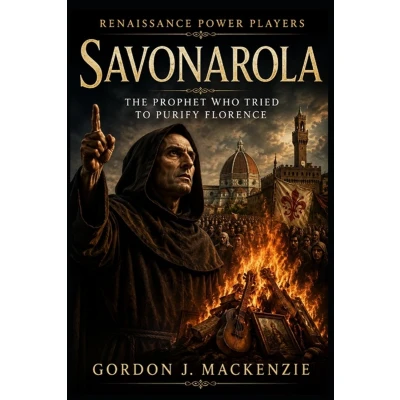
In Renaissance Florence, beauty was everywhere. Palaces rose, artists flourished, merchants prospered, and the Medici shaped the city through wealth, patronage, and political skill. Yet beneath the brilliance lay corruption, faction, fear, and spiritual unease.Into that world came Girolamo Savonarola, a Dominican friar from Ferrara whose sermons shook Florence to its core. He warned that judgement was coming, condemned luxury and vanity, attacked clerical corruption, and challenged the power of the Medici. When the French invasion of Italy seemed to confirm his prophecies, Savonarola became more than a preacher. He became the conscience of a republic.For a brief and extraordinary moment, Florence tried to become a Christian commonwealth. Children marched through the streets. Vanities were burned in the piazza. The Great Council gave new life to republican hopes. Savonarola's voice seemed to stand above princes, popes, and patrons.But the same certainty that made him powerful also made him dangerous. His reform movement divided the city, alarmed Rome, and turned moral renewal into public pressure. Excommunicated by Pope Alexander VI and abandoned by much of Florence after the failed trial by fire, Savonarola was arrested, tortured, hanged, and burned in the Piazza della Signoria in 1498.Savonarola: The Prophet Who Tried to Purify Florence tells the story of a man who was neither simple saint nor simple fanatic. He was a reformer, prophet, political force, critic of corruption, and dangerous master of public conscience. His rise and fall reveal one of the Renaissance's most unsettling questions: can a city be made holy without being destroyed by the attempt?


 Beschrijving
(1)
Beschrijving
(1)
In Renaissance Florence, beauty was everywhere. Palaces rose, artists flourished, merchants prospered, and the Medici shaped the city through wealth, patronage, and political skill. Yet beneath the brilliance lay corruption, faction, fear, and spiritual unease.Into that world came Girolamo Savonarola, a Dominican friar from Ferrara whose sermons shook Florence to its core. He warned that judgement was coming, condemned luxury and vanity, attacked clerical corruption, and challenged the power of the Medici. When the French invasion of Italy seemed to confirm his prophecies, Savonarola became more than a preacher. He became the conscience of a republic.For a brief and extraordinary moment, Florence tried to become a Christian commonwealth. Children marched through the streets. Vanities were burned in the piazza. The Great Council gave new life to republican hopes. Savonarola's voice seemed to stand above princes, popes, and patrons.But the same certainty that made him powerful also made him dangerous. His reform movement divided the city, alarmed Rome, and turned moral renewal into public pressure. Excommunicated by Pope Alexander VI and abandoned by much of Florence after the failed trial by fire, Savonarola was arrested, tortured, hanged, and burned in the Piazza della Signoria in 1498.Savonarola: The Prophet Who Tried to Purify Florence tells the story of a man who was neither simple saint nor simple fanatic. He was a reformer, prophet, political force, critic of corruption, and dangerous master of public conscience. His rise and fall reveal one of the Renaissance's most unsettling questions: can a city be made holy without being destroyed by the attempt?
 Productspecificaties
 Prijshistorie
* Prijshistorie bevat geen data van Amazon, Amazon Marketplace.
Prijzen voor het laatst bijgewerkt op:
 Gerelateerde resultaten


