


€ 38,69 Gratis verzending

Uitgelicht
|
|
38,69 |
Naar shop
|

|
81,08 |
Naar shop
|
| VERGELIJK ALLE AANBIEDERS (2) | ||
 Beschrijving
Vergelijk aanbieders (2)
€ 38,69 Gratis verzending
€ 81,08 € 9,99 verzendkosten Totaal € 91,07
Winkels met andere maten
Beschrijving
(1)
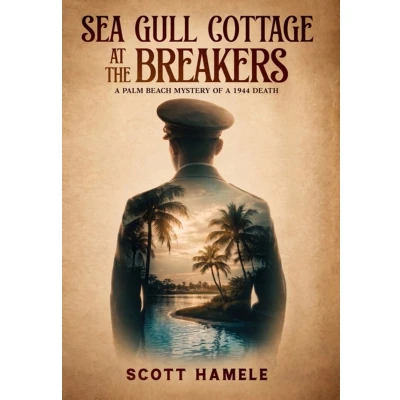
Set between December 1943 and April 1944, with a later thread in January to February 1950, this story unfolds within and around a grand Palm Beach hotel that once served a very different purpose.In 1950, a young woman arrives at the hotel with her husband, intending only to spend a quiet season and pay respect to her father, an Army officer whose death during the war was long ago recorded as routine. The hotel, restored to elegance, carries itself with confidence, yet certain spaces feel too carefully arranged, as if time has been smoothed over rather than resolved. When the couple is placed in a private seaside cottage tied to her father's final days, the past begins to press forward in subtle ways that are difficult to explain and harder to dismiss.What begins as private remembrance turns into a measured search for clarity. The woman moves carefully through conversations with hotel staff, local residents, and those who remember the building during its wartime use as a military hospital. Their recollections do not align neatly with the official record. Instead, they suggest gaps, softened language, and decisions made for the sake of order rather than truth.The narrative shifts back to the war years, revealing the same location transformed into a place of recovery for wounded officers. In that earlier time, her father was not a dying man but one recovering with intention and clarity. Within the confined and uneasy environment of a converted luxury hotel, relationships formed under strain. Conversations carried more weight than they appeared to. Authority shaped outcomes quietly.As the two timelines move toward each other, patterns emerge. A wartime incident abroad, a conflict between officers, and a death that did not follow its expected course begin to connect. The present-day investigation never becomes loud or public. It remains contained within private rooms, quiet records, and the memories of those who were present but not empowered to speak.By the time the truth becomes clear, it does not arrive as spectacle or revelation, but as alignment. Memory, place, and record begin to agree. The central question is no longer what happened, but what can be done with knowledge that arrives too late for formal justice. The story closes on the idea that places do not forget, even when people are asked to.
 Prijshistorie
 * Prijshistorie bevat geen data van Amazon.
Prijzen voor het laatst bijgewerkt op:
 Gerelateerde resultaten
 Productspecificaties


