


€ 26,99 Gratis verzending

Gesponsorde links
|
|
26,99 |
Naar shop
|

|
27,58 |
Naar shop
|
| VERGELIJK ALLE AANBIEDERS (2) | ||
 Beschrijving
Vergelijk aanbieders (2)
Gesponsorde links · Sommige shops betalen ons een vergoeding
€ 26,99 Gratis verzending
€ 27,58 Gratis verzending
Winkels met andere maten
Beschrijving
(1)
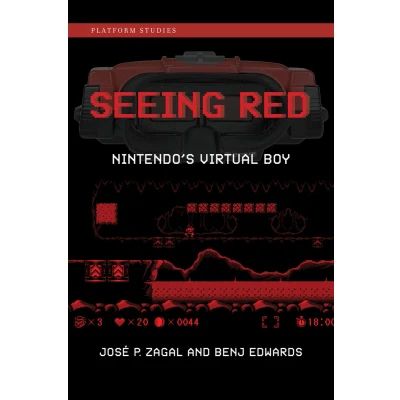
The curious history, technology, and technocultural context of Nintendos short-lived stereoscopic gaming console, the Virtual Boy. The console was red. The (revolutionary!) stereoscopic 3D graphics were red. And shortly after its vaunted release in 1995, Nintendo's balance sheet was in the red. Of all the failures the games industry has witnessed over the years, perhaps the most famousor infamouswas the Virtual Boy. Why the Virtual Boy failed is one question Jose´ Zagal and Benj Edwards explore in Seeing Red, but even more interesting to the authors is what the platform was: what it promised, how it worked, and where it fit into the evolving story of gaming. A red-and-black standalone tabletop video game console that featured stereoscopic 3D graphics, the Virtual Boy was released by Nintendo in 1995and was quickly discontinued after lackluster sales and lukewarm critical reception. In Seeing Red, Zagal and Edwards examine the devices technical capabilities, the games that were created for it, and the cultural context in the US in the 1990s when it was developed and released. The Virtual Boy, in their account, built upon and extended a historical tradition in immersive, visually engaging entertainment that was largely unexplored in video games at the time. The authors show how the platform has a "softography" of games with a distinct shared visual aesthetic style that has not been significantly developed or explored since the Virtual Boy's release, having been superseded by polygonal 3D graphics. The platform's meaning, they contend, lies as much in its design and technical capabilities and affordances as it does in an audiences perception of those capabilities. Offering rare insight into how we think about video game platforms, Seeing Red illustrates where perception and context come, quite literally, into play.
 Prijshistorie
* Prijshistorie bevat geen data van Amazon.
Prijzen voor het laatst bijgewerkt op:
 Gerelateerde resultaten
 Productspecificaties


