

€ 48,96 Gratis verzending

Uitgelicht
|
|
48,96 |
Naar shop
|

|
48,96 |
Naar shop
|

|
52,99 |
Naar shop
|
| VERGELIJK ALLE AANBIEDERS (3) | ||
 Beschrijving
Vergelijk aanbieders (3)
€ 48,96 Gratis verzending
€ 48,96 Gratis verzending
€ 52,99 Gratis verzending
Winkels met andere maten
Beschrijving
(1)
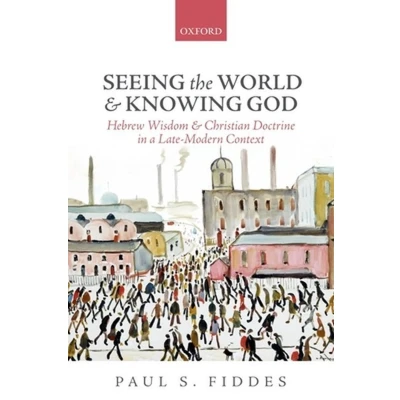
This creates a Christian theology of wisdom for the present day, in discussion with two sets of conversation-partners: The writers of the 'wisdom literature' in ancient Israel and the Jewish community in Alexandria; and the philosophers and thinkers of the late-modern age, among them Derrida, Levinas, Kristeva, Ricoeur, and Arendt. This book aims to create a Christian theology of wisdom for the present day, in discussion with two sets of conversation-partners. The first are writers of the 'wisdom literature' in ancient Israel and the Jewish community in Alexandria. Here, special attention is given to the biblical books of Proverbs, Job, and Ecclesiastes. The second conversation-partners are philosophers and thinkers of the late-modern age, among them Jacques Derrida, Emmanuel Levinas, Julia Kristeva, Paul Ricoeur, and Hannah Arendt. In the late-modern period there has been a reaction against an inherited conception of the conscious and rational self as mastering and even subjugating the world around, and there has been an attempt to overcome the consequent split between the subject and objects of observation. Paul S. Fiddes enters into dialogue with these late-modern concerns about the relation between the self and the world, proposing that the wisdom which is indicated by the ancient Hebraic concept of ḥokmah integrates a 'practical wisdom' of handling daily experience with the kind of wisdom which is 'attunement' to the world and ultimately to God as creator and sustainer of all. Fiddes brings detailed exegesis of texts from the ancient wisdom literature into interaction with an account of the subject in late-modern thought, in order to form a theology in which seeing the world is knowing a God whose transcendent reality is always immanent in the signs and bodies of the world. He thus argues that participation in a triune, relational God shapes a wisdom that addresses problems of a dominating self, and opens the human person to others.
 Prijshistorie
 * Prijshistorie bevat geen data van Amazon, Amazon Marketplace.
Prijzen voor het laatst bijgewerkt op:
 Gerelateerde resultaten
 Productspecificaties


