
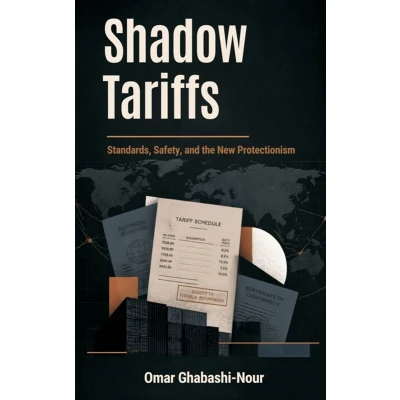
Shadow Tariffs: Standards, Safety, and the New Protectionism
Uitgelicht

|
59,99 |
Naar shop
|

|
75,00 |
Naar shop
|

|
75,00 |
Naar shop
|
| VERGELIJK ALLE AANBIEDERS (3) | ||
 Beschrijving
Bol
In an era when average tariffs are lower than at any point in modern history, trade wars have not disappeared; they have moved into the realm of technical requirements. Shadow Tariffs shows how standards, testing regimes and regulatory procedures now shape who can sell what to whom, and on what terms. Moving beyond slogans about free trade or protection, the book patiently unpacks how apparently neutral rules about safety, quality or data can operate as decisive barriers to entry. It situates these developments within the long arc of trade liberalisation, industrial policy and international political economy, highlighting how power, expertise and market structure are quietly reorganised through technical language.Covering sectors from food and agriculture to electronics, digital services and green technologies, the book analyses the institutions that govern technical measures and the politics of who gets a seat at the table. It investigates how technical barriers to trade are negotiated in international forums, how conformity assessment and compliance costs shape firm strategy, and how capacity constraints affect developing country exporters. Along the way, it examines disputes over labelling, safety certification, data localisation and sustainability labels, showing how each encapsulates larger struggles over risk, justice and competitiveness.Written for students, policy analysts, legal practitioners and business strategists, Shadow Tariffs offers more than a catalogue of cases. It provides a decision lens for reading rules as potential shadow tariffs: tracing their stated aims, design choices, enforcement pathways and distributional consequences. Readers will come away equipped to distinguish consumer and environmental protection from disguised protectionism, to anticipate how new standards might restructure markets, and to engage more effectively in debates over the future of global trade.


 Beschrijving
(1)
Beschrijving
(1)
In an era when average tariffs are lower than at any point in modern history, trade wars have not disappeared; they have moved into the realm of technical requirements. Shadow Tariffs shows how standards, testing regimes and regulatory procedures now shape who can sell what to whom, and on what terms. Moving beyond slogans about free trade or protection, the book patiently unpacks how apparently neutral rules about safety, quality or data can operate as decisive barriers to entry. It situates these developments within the long arc of trade liberalisation, industrial policy and international political economy, highlighting how power, expertise and market structure are quietly reorganised through technical language.Covering sectors from food and agriculture to electronics, digital services and green technologies, the book analyses the institutions that govern technical measures and the politics of who gets a seat at the table. It investigates how technical barriers to trade are negotiated in international forums, how conformity assessment and compliance costs shape firm strategy, and how capacity constraints affect developing country exporters. Along the way, it examines disputes over labelling, safety certification, data localisation and sustainability labels, showing how each encapsulates larger struggles over risk, justice and competitiveness.Written for students, policy analysts, legal practitioners and business strategists, Shadow Tariffs offers more than a catalogue of cases. It provides a decision lens for reading rules as potential shadow tariffs: tracing their stated aims, design choices, enforcement pathways and distributional consequences. Readers will come away equipped to distinguish consumer and environmental protection from disguised protectionism, to anticipate how new standards might restructure markets, and to engage more effectively in debates over the future of global trade.
 Productspecificaties
 Prijshistorie
* Prijshistorie bevat geen data van Amazon, Amazon Marketplace.
Prijzen voor het laatst bijgewerkt op:
 Gerelateerde resultaten


