


€ 24,95 Gratis verzending

Uitgelicht
|
|
24,95 |
Naar shop
|

|
98,85
78,55 |
Naar shop
|
| VERGELIJK ALLE AANBIEDERS (2) | ||
 Beschrijving
Vergelijk aanbieders (2)
€ 24,95 Gratis verzending
€ 98,85 € 78,55 Gratis verzending
Winkels met andere maten
Beschrijving
(2)
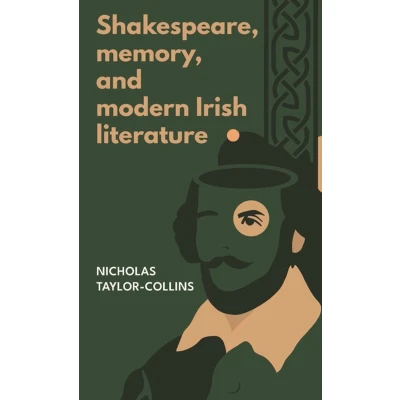
Shakespeare, memory, and modern Irish literature explores the intertextual connections between early modern English and modern Irish literature. Characterising the relationship as ‘dismemorial’, the book explores how ghosts, bodies, and the land are sites of literary connection through which contemporary Ireland draws on Shakespeare’s England. In Shakespeare, memory, and modern Irish literature, Nicholas Taylor-Collins charts the ways that the modern Irish nation is underwritten by Irish writers whose own cultural agency is improved by their engagement with William Shakespeare. Through a wide-ranging theoretical approach, Taylor-Collins privileges forms of intertextual memory that avoid the obvious quotation or explicit reference: this innovating proposal for a ‘dismemorial’ intertextuality allows readers to read both Shakespeare and the Irish writers with renewed understanding of their craft.In the Introduction, Taylor-Collins establishes the grounds for comparison: both early modern England and modern/contemporary Ireland deploy a commemorative practice reliant on the theatre as a locus. Thereafter Taylor-Collins proceeds to examine the Shakespeare–Ireland connection through ghosts, bodies, and the land. In the first section, an exploration of Hamlet’s hauntology enhances readings of J. M. Synge’s Playboy of the Western World, James Joyce’s Ulysses, and John Banville’s Ghosts. The second section explores first how antitheatrical corporal economies in Coriolanus and Ben Jonson’s satires re-emerge in Beckett’s Three Novels, before moving on to Caithleen in Edna O’Brien’s The Country Girls Trilogy as she borrows from ‘hysterical’ forebears in Othello, The Taming of the Shrew, and The Winter’s Tale. The final section explores W. B. Yeats’s infatuation with the surface of the land via King Lear and As You Like It, before finishing with Seamus Heaney’s rootedness in the land via Hamlet’s jumping into Ophelia’s grave.For scholars and students of Shakespeare and modern/contemporary Irish literature alike, this book will also appeal to continental theorists. This original and innovative book proposes ‘dismemory’ as a new form of intertextual engagement with Shakespeare by modern and contemporary Irish writers. Through reflection on these canonical writers and ranging across thirteen Shakespeare plays, Taylor-Collins demonstrates how Irish writers who helped to fashion and critique the Irish nation state carry an indelible, if often subdued, mark of Shakespeare’s early modern English influence.The volume overall renews and revitalises the Shakespeare–modern Ireland connection: Taylor-Collins reveals Hamlet’s hauntological legacy in Playboy of the Western World, Ulysses, and Ghosts; how the corporal economies that exert pressure from Coriolanus and Ben Jonson flicker through to the antiheroes in Beckett’s Three Novels; and how the landed legacies of territorial contests in Shakespeare are engaged with in Yeats’s poetry, and similarly how the diseased muddiness in Hamlet is addressed by Heaney.
BolThis original and innovative book proposes ‘dismemory’ as a new form of intertextual engagement with Shakespeare by modern and contemporary Irish writers. Through reflection on these canonical writers and ranging across thirteen Shakespeare plays, Taylor-Collins demonstrates how Irish writers who helped to fashion and critique the Irish nation state carry an indelible, if often subdued, mark of Shakespeare’s early modern English influence. The volume overall renews and revitalises the Shakespeare–modern Ireland connection: Taylor-Collins reveals Hamlet’s hauntological legacy in Playboy of the Western World, Ulysses, and Ghosts; how the corporal economies that exert pressure from Coriolanus and Ben Jonson flicker through to the antiheroes in Beckett’s Three Novels; and how the landed legacies of territorial contests in Shakespeare are engaged with in Yeats’s poetry, and similarly how the diseased muddiness in Hamlet is addressed by Heaney.
 Productspecificaties
| EAN |
|
|---|---|
| Maat |
|
 Prijshistorie
 Prijzen voor het laatst bijgewerkt op:
 Gerelateerde resultaten


