


gebruikt € 66,56 Gratis verzending

Uitgelicht
|
|
66,56 |
Naar shop
|
| VERGELIJK ALLE AANBIEDERS (1) | ||
 Beschrijving
Vergelijk aanbieders (1)
gebruikt € 66,56 Gratis verzending
Winkels met andere maten
Beschrijving
(1)
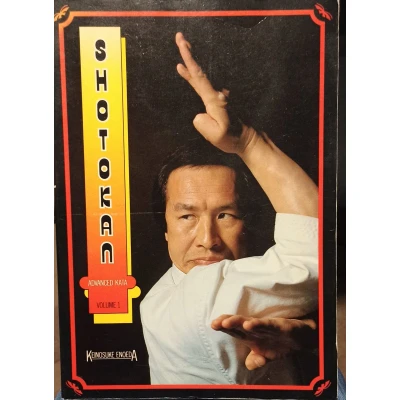
A dictionary definition of Karate Kata might read as follows: — 6 A form or exercise in the Japanese mar tal art of Karate-Do. The performance of a sequence of complex Karate techniques in a prease and regulated manner, in order to meet and repulse the mmagimnary attacks of multiple assailants. A method of teaching self defence through the use of Karate, a way of exercising and developing the body. © Such a definition, although precise and informative in the academic sense, does not even hint at the importance or the significance of Kata. In fact, the art of Karate itself was handed down to us from ancient times, largely in the form of Kata, each of which had been refined and perfected over the centuries by the practical experience in combat, and the dedicated practice of long dead Karate masters. The existence of these elements of personal combat experience, the danger and uncertainty of the times and the consequent need for an effective method of self defence, allbwed the Kata to survive In a practical form. Its enforced contact with reality, prevented the Kata degenerating into a mmeaningliess theatrical performance of techniques. Thus it avoided the fate of some schools of Japanese swordsmanship, and other martial arts, that declined into shadows of their former selves during the relatively peaceful centuries of Tokugawa rule. But most important of all, it allowed the Kata to continue to perform their principal function of teaching practical, effective fighting methods. The legacy of these ancient masters numbers in the region of fifty Kata, each of which reflects not only its time and place of origin, but also the preferences and attitudes of the originator and those who followed in his footsteps through the intervening centuries. Broadly speaking we can divide Kata into two distinct types, those emphasizing fast, light and evasive movements, and those favouring slow, powerful and direct techniques. The first category teaches the student to control bk and co-ordinate the movements of his body accu{ rately, and to move fast and effectively with correct timing. The second builds bone, muscle, strength and stamina. It naturally follows therefore, that the regular performance and study of both types of Kata, contain ing as they do stretching, blocking, kicking and balan cing techniques from both categories, will exercise and develop the body in an effective and beneficial way, and at the same tme instil genume fighting ability into the dilitgent student. The final point about Kata that |l would Iike to bring to your attention is an important one, that nevertheless is often missed, or not recognised for its importance. It is that etiquette is of the utmost importance in Karate-Do, and must be maintained at all times. Therefore, whenever you practice do so with modesty, but not timidity. Be ready at all times to express yourself through the Kata you are performing by bringing together your mind, body and the movements of the exercise. Avoid however at all costs * becoming preoccupied with the rules and method of the performance of the Kata, to the exclusion of the fighting methods that they contain, the learning of which were, and are the principal purpose of these important and exacting exercises. Notes on the performance of the Kata. 1. Always bow before performing a Kata. 2. Perform the movements in exactly the right sequence, moving in the correct direction at any given. time, and starting and finishing on exactly the same spot. 3. Understand precisely the meaning of each movement, and its objective, then attack or defend accordingly. Perform the Kata as authentically as possible by combining the following essential principles: Correct Adjustment of Power (hard-soft) Speed of Technique (slow-fast) Flexibility of Body (tense-relaxed)
 Productspecificaties
| EAN |
|
|---|---|
| Maat |
|
 Gerelateerde resultaten


