

€ 9,26 Gratis verzending

Uitgelicht
|
|
9,26 |
Naar shop
|

|
9,26 |
Naar shop
|

|
10,50 |
Naar shop
|
| VERGELIJK ALLE AANBIEDERS (3) | ||
 Beschrijving
Vergelijk aanbieders (3)
€ 9,26 Gratis verzending
€ 9,26 Gratis verzending
€ 10,50 € 2,99 verzendkosten Totaal € 13,49
Winkels met andere maten
Beschrijving
(1)
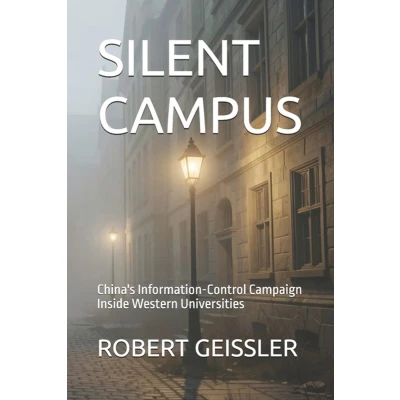
No tanks crossed a border. No cyberattack took down a grid. The most consequential campaign the Chinese Communist Party has waged against Western institutions in the past two decades left no headline event - only a slow accumulation of closed doors, softened syllabi, and questions that stopped getting asked in faculty meetings.In Silent Campus, retired law enforcement lieutenant and publisher Robert F. Geissler traces how Beijing built durable influence over American and allied universities - not primarily through espionage, but by making itself financially indispensable enough that self-censorship became the path of least resistance. From the rise and rebranding of Confucius Institutes to undisclosed Thousand Talents Plan recruitment, from consulate-linked student associations to the transnational repression faced by Uyghur, Tibetan, and Hong Kong students on Western soil, Geissler documents a patient, well-funded campaign - and the university administrators, congressional investigators, and federal prosecutors who have struggled to keep pace with it.Drawing on government reports, court records, and congressional testimony through mid-2026, this is neither a call for blanket suspicion of Chinese students and scholars nor an apology for institutional silence. It is an argument, grounded in Austrian and Chicago School economic thinking, that transparency - not restriction - is the only tool equal to a threat built almost entirely on opacity.
 Prijshistorie
 * Prijshistorie bevat geen data van Amazon, Amazon Marketplace.
Prijzen voor het laatst bijgewerkt op:
 Gerelateerde resultaten
 Productspecificaties


