


€ 219,00 Gratis verzending

Uitgelicht
|
|
219,00 |
Naar shop
|

|
231,19 |
Naar shop
|

|
231,19 |
Naar shop
|
| VERGELIJK ALLE AANBIEDERS (3) | ||
 Beschrijving
Vergelijk aanbieders (3)
€ 219,00 Gratis verzending
€ 231,19 Gratis verzending
€ 231,19 Gratis verzending
Winkels met andere maten
Beschrijving
(1)
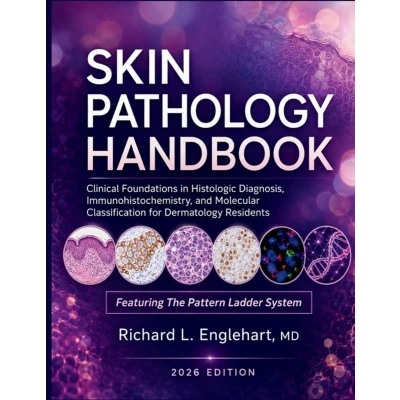
Built for the reader who has to resolve a biopsy before the next case loads onto the scope, this reference connects normal skin histology and a structured pattern-recognition algorithm to the specific calls that decide a patient's treatment path - wide excision or observation, sentinel node biopsy or reassurance, genetics referral or routine follow-up. It moves from foundational pattern analysis through inflammatory dermatoses, infectious and infestation-related disease, epidermal and melanocytic neoplasia, adnexal tumors, and mesenchymal, hematolymphoid, and special-context entities, closing each differential with the same five-step discipline: name the pattern, name its most dangerous mimicker, and resolve the gap with a targeted stain or finding. Fifty-six worked differentials, evidence-graded management, and a dedicated indexed atlas turn dense criteria into calls you can defend on the record. From the Punch Biopsy to the Final Call, You Will - Resolve overlapping inflammatory patterns - distinguish early bullous pemphigoid from spongiotic dermatitis and lichen planus from a lichenoid drug eruption using infiltrate composition and immunofluorescence. - Grade the melanocytic gray zone - separate severely dysplastic nevus from melanoma in situ and atypical Spitz tumor from Spitzoid melanoma using 9p21 deletion status and kinase fusion testing. - Clear the trichoepithelioma-versus-basal-cell-carcinoma trap - apply CK20, CD10, and PHLDA1 to a differential that changes the surgical margin. - Screen sebaceous neoplasms for Muir-Torre syndrome - reflex mismatch repair immunohistochemistry that can catch Lynch syndrome before the first internal malignancy. - Confirm dermatofibrosarcoma protuberans and patch-stage Kaposi sarcoma - CD34 and HHV-8 criteria that stop a sarcoma or an AIDS-defining lesion from reading as benign. - Catch patch-stage mycosis fungoides hiding in "eczema" - CD7 loss and clonality findings that end a years-long diagnostic delay. - Read nail unit melanonychia and scarring alopecia with confidence - MART-1 melanocyte mapping and direct immunofluorescence patterns that separate benign activation and lichen planopilaris from their malignant and lupus-associated mimics. - Recognize the cutaneous signal of hereditary cancer syndromes - Gorlin, Birt-Hogg-Dubé, and Cowden findings that belong in the report, not just the differential. Bring it to the microscope - every call in this book is one your next patient is counting on you to get right.
 Prijshistorie
 * Prijshistorie bevat geen data van Amazon, Amazon Marketplace.
Prijzen voor het laatst bijgewerkt op:
 Gerelateerde resultaten
 Productspecificaties


