


€ 43,99 Gratis verzending

Uitgelicht
|
|
43,99 |
Naar shop
|

|
45,84 |
Naar shop
|
| VERGELIJK ALLE AANBIEDERS (2) | ||
 Beschrijving
Vergelijk aanbieders (2)
€ 43,99 Gratis verzending
€ 45,84 Gratis verzending
Winkels met andere maten
Beschrijving
(1)
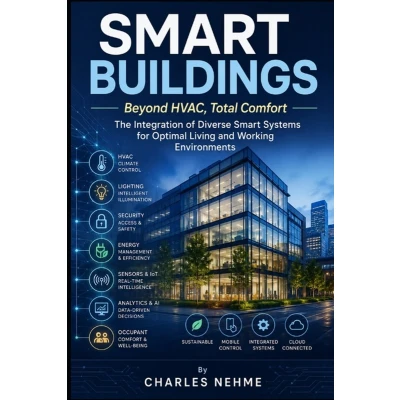
Buildings have traditionally operated as collections of isolated systems-HVAC managing temperature, lighting on schedules, security functioning independently. This fragmentation leaves significant performance gaps and missed opportunities.Smart buildings dissolve these boundaries. They integrate diverse systems-thermal, visual, acoustic, air quality, occupancy, and security-coordinating them toward common objectives of occupant comfort, energy efficiency, and operational excellence. When these systems communicate and adapt, they achieve outcomes impossible through isolated optimization.This book provides comprehensive coverage of smart building systems beyond traditional HVAC focus. It addresses building professionals who need integrative understanding: engineers specifying systems, facility managers operating them, commissioning professionals verifying performance, and consultants advising implementation.Key ThemesOccupant-centricity drives design decisions-environmental control should prioritize occupant health and comfort. Data-driven operation replaces schedules with continuous analytics and optimization. Integration paradoxically improves resilience through coordination and adaptation. Energy-comfort balance emerges through algorithmic optimization, not compromise. Continuous improvement occurs through machine learning and ongoing refinement.Who Should Read ThisMEP engineers, facility managers, commissioning professionals, building consultants, energy managers, and facility decision-makers seeking comprehensive understanding of contemporary building systems.What You'll FindSeventeen chapters covering foundation concepts, HVAC advancement, lighting for human performance, air quality management, occupancy optimization, energy management, water systems, security integration, thermal and acoustic comfort, digital infrastructure, analytics and predictive maintenance, user interfaces, real-world case studies, implementation roadmaps, and emerging technologies.Each chapter balances theoretical foundation, practical implementation, and integration strategy-emphasizing outcomes: improved comfort, reduced energy consumption, decreased operational costs, and enhanced flexibility.The PromiseSmart buildings are deployed today in thousands of facilities, delivering documented benefits: 15-30% energy reductions, 20-40% occupant satisfaction improvements, 30-50% maintenance cost reductions, with life-cycle benefits exceeding investment within 3-5 years. The challenge is integrative, not technological-how to design systems working together, implement systematically, operate continuously improving, and engage occupants as active participants.This book addresses those challenges.
 Prijshistorie
 * Prijshistorie bevat geen data van Amazon.
Prijzen voor het laatst bijgewerkt op:
 Gerelateerde resultaten
 Productspecificaties


