


€ 18,00 € 2,99 verzendkosten Totaal € 20,99

Gesponsorde links
|
|
18,00 |
Naar shop
|

|
18,40 |
Naar shop
|

|
18,40 |
Naar shop
|
| VERGELIJK ALLE AANBIEDERS (3) | ||
 Beschrijving
Vergelijk aanbieders (3)
Gesponsorde links · Sommige shops betalen ons een vergoeding
€ 18,00 € 2,99 verzendkosten Totaal € 20,99
€ 18,40 Gratis verzending
€ 18,40 Gratis verzending
Winkels met andere maten
Beschrijving
(1)
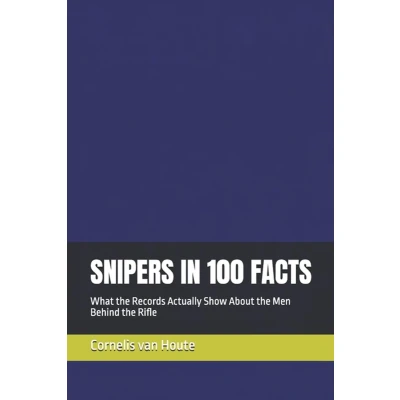
The history of military sniping has long been filtered through wartime propaganda, commercial storytelling, and cinematic legends that often collapse under archival scrutiny. When examining what the records actually show about the men behind the rifle, it becomes clear that sniping is fundamentally defined by concealment and observation rather than sheer marksmanship. Selection courses consistently fail candidates for fieldcraft and the stalk far more often than for shooting accuracy, and a sniper pair actually spends the vast majority of its operational life observing, recording, and reporting environmental and enemy data without ever firing a single round. Furthermore, the true impact of a sniping campaign is measured by changes in enemy behavior-such as restricted movement, forced caution, and degraded command structures-rather than raw casualty tallies. Different armies throughout history have maintained vastly incompatible standards for verifying and recording kills. The Soviet Union relied on witness verification from fellow soldiers or junior officers, tying records closely to propaganda and decorations while maintaining extensive personal books and unit archives. Finland utilized a more informal unit-level approach preserved in chaplain diaries and citations, resulting in famous figures like Simo Häyhä whose tallies vary widely. Germany required formal badge standards and officer presence for official claims, while the United States and Commonwealth forces generally declined official individual scoring across most wars, instead relying on command logs and strict witness rules like those enforced during the Vietnam War. To help readers cut through these myths, Snipers in 100 Facts: What the Records Actually Show About the Men Behind the Rifle strips away the folklore to examine the raw documentation, tactical realities, and administrative structures of the trade. From hunting roots and trench doctrine in 1915 to the mass programs of the Eastern Front, strict verification rules, and modern data-driven warfare, the book applies one uncompromising standard to the subject. Readers discover why the observer is the senior partner in a sniper pair, why distance records are contested administrative artifacts, and why every major military power has repeatedly dismantled its sniping capability only to rebuild it under fire. Cornelis van Houte
 Prijshistorie
* Prijshistorie bevat geen data van Amazon, Amazon Marketplace.
Prijzen voor het laatst bijgewerkt op:
 Gerelateerde resultaten
 Productspecificaties


