


€ 78,99 Gratis verzending

Uitgelicht
|
|
78,99 |
Naar shop
|

|
87,19 |
Naar shop
|
| VERGELIJK ALLE AANBIEDERS (2) | ||
 Beschrijving
Vergelijk aanbieders (2)
€ 78,99 Gratis verzending
€ 87,19 Gratis verzending
Winkels met andere maten
Beschrijving
(1)
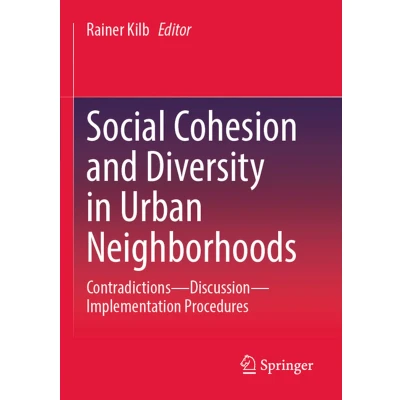
In the current urban development debate, the vision of a diverse urban neighborhood is often linked with social cohesion as a target aspect of favorable community development. In the current urban development debate, the vision of a diverse urban neighborhood is often linked with social cohesion as a target aspect of favorable community development. This initially euphemistic connection is in need of explanation, as valid empirical findings suggest that with increasing socio-economic and socio-cultural differentiation, the probability of conflict becomes more pronounced, and social cohesion is likely to decrease. Nevertheless, this connection should be maintained, as social science findings on social polarization and segregation, social segmentation, and fragmentation indicate that urban spatial structures should be designed in such a way that social diversity among residents not only coexists but can also become cooperatively action-oriented within the framework of a community. The resulting conflicts of interest can, in their constructive version, serve as impulses for democratic understanding and decision-making. However, this requires integrative and manageable components, which a well-planned urban neighborhood can provide more effectively than urban sprawl or additive high-density residential silos developed solely for economic yield. How a diverse neighborhood could be planned, designed, implemented, and supported in its community-building process is illustrated and reflected upon using the example of a new neighborhood emerging in Mannheim.
 Prijshistorie
 * Prijshistorie bevat geen data van Amazon.
Prijzen voor het laatst bijgewerkt op:
 Gerelateerde resultaten
 Productspecificaties


